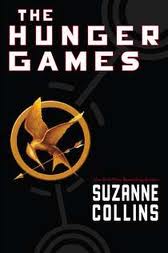
This week's Top Ten List (hosted by The Broke and the Bookish) asks us to choose ten books written in the last decade (or so) that we hope people will still be reading in 30 years time. Since I haven't done a Top Ten in a while, this seemed like a good week to jump back in. I mean, basically I just have to list my ten favorite books of the last ten years right?
As it turns out, wrong. There is a difference between a book that you loved personally and one that you think that people should still be reading in 30 years. For that kind of staying power it should be something that speaks to our common humanity and portrays something important about our society at large, in my humble opinion. So, I have created a list not just of books that I love (though I do love them all), but that I think have something important to say about the human experience and the societies we create.
A Thousand Splendid Suns, Khaled Mosseini-The eradication of the oppression of women is a major indicator of a society becoming more developed, and this book shows us why.
The Hunger Games, Suzanne Collins-Yes, I know it's YA and people are probably tired of hearing about it, but this book is so full of social commentary that I hope teachers are actively teaching with it 30 years from now-and that we have not yet taken our voyeurism and "reality" tv to that extreme.
The Harry Potter Series-Basically for the same reason as The Hunger Games. Underlying the magic and whimsical elements is a solid foundation of social justice and equality.
The Time Traveler's Wife, Audrey Niffenegger-OK, this one is mostly on the list just because I loved it so, but it does have some interesting things to say about the nature of relationships.
Oryx and Crake and The Year of the Flood, Margaret Atwood-What The Handmaid's Tale did in highlighting reproductive choice, these books do for environmental issues, with some feminism thrown in.
Nickel and Dimed, Barbara Ehrenreich-This book puts the lie to the conservative claim that if you have a job and work hard you will get ahead in American. Not if you are working for minimum wage, and Ehrenreich lived it to prove it.
The Book Thief, Markus Zusak-Amazingly beautiful, heart-breaking, transcendent and brutal, reading this book made me understand how the Nazi's affected the everyday German, and it is a great picture of courage.
Monster, Walter Dean Myers-Another YA title, this book illuminates the way that poverty and the need to survive can make people act against their own interests, and how incarceration affects teens.
Showing posts with label racism. Show all posts
Tuesday, May 29, 2012
Saturday, December 24, 2011
Life Sentences by Laura Lippman
For many years I prided myself on the fact that I never gave up on a book. Even if a book was not really doin' it for me, I stuck with it, sure that the author was trying to convey something that I just needed to work a little harder to pick up on. After all, they took the time and care to write the darn thing-I should at least put in the time and effort to finish it.
Then one day (perhaps struck by a growing sense of my own mortality) I decided that there are too many good books in the world to waste my precious reading time on bad ones, and I've put down many a snoozer since. But not my favorite authors. Surely if I have loved everything a person has ever written, then if I just keep slogging through one of their books I will find that moment of joy in the written word. Surely my favorite authors would not let me down?
Laura Lippman, I am sad to say, you've let me down.
Life Sentences is the story of Cassandra Fallows, an author who became successful writing about her father's infidelities and their affect on her. After writing a less-than-stellar novel, she goes home to Baltimore to mine her childhood friendships for another memoir, something that will take her back to her bestseller status. The irony is that in writing about an author who is afraid she's lost her mojo, Lippman has written a novel that shows that perhaps her mojo took a bit of a vacation.
The impetus for Cassandra's return to her childhood home is the story of an old schoolmate of hers who went to jail for seven years rather than reveal what happened to her infant, who disappeared and was never found. In revisiting her childhood friendships, Cassandra discovers just how fallible memory can be. Her old friends are upset with her portrayal of them in print, and they refuse to help her find their old classmate. Lots of intrigue ensues, revealing a conspiracy that involves politicians, blackmail, and twenty years of secrets.
To which I say "yawn". Lippman usually pairs really good character development with intriguing plots to create suspense novels that are not formulaic, but little windows into human behavior. Her novels usually carry some kind of emotional punch, but I found myself not really caring what happened to any of the characters, including the narrator. I made myself stick with it, partly for the reason above and partly because the mystery was (just) engaging enough to make me want to know how it resolved, but even the ending was a disappointment-more whimper than wow. Since this Lippman book is a stand-alone, I'd say skip it. Her Tess Monaghan books and other stand-alones are a much better use of your reading time!
Thursday, December 22, 2011
The Buddha in the Attic
The experience of immigrant groups in the United States is something that has interested me ever since I took a multicultural education class a few years ago. I read some really moving testimonials from people of various immigrant groups (beginning with Italians and the Irish and moving on through Chinese, Japanese, and Mexican) describing their experiences (or the family stories passed down by their grandparents) and how their families never gave up on making it in America.
My own family immigration history is fairly recent. My paternal grandparents came to America in the early 20th century from Quebec. They settled in New England, in an area where there was already a community for them to join. While my great-grandparents spoke Quebecois French almost exclusively, it did not take long for my grandmother and grandfather to learn English and assimilate into mainstream American culture. My grandfather fought in World War II, and was proud to serve the nation he saw as his, even though he had only been in the US for half of his rather short life at that point.
We as a society have never been particularly welcoming to new arrivals, regardless of where they are from or what the words on the Statue of Liberty may imply about how inclusive we pretend we are. The myth propagated is that as long as immigrants are willing to work-hard and respect American values we will accept them with open arms. The reality is that every immigrant group has started out on the lowest rung of American society, doing the jobs that no one wants to do, being discriminated against in public services, and being used as a pawn by politicians who want to scare people with the image of being overrun by the "other". Perhaps the most egregious case of this phenomenon happened to the Japanese in America during World War II. It is this immigrant experience that Julie Otsuka chronicles in her book The Buddha in the Attic.
Otsuka's book is written in the third person plural, from the perspective of women who were brought to the United States from Japan after World War I as wives to Japanese men they had never met. This rather interesting literary device is used to highlight the similarities of the immigrant experience for these women, even as it describes the variety of experiences that defined them as farm laborers, shop clerks, maids, and laundry workers. This very short novel, spare in its language, presents a portrait of women who try to find some way to survive in a world that has turned upside down, taking them away from everything they know to a world where not even the man they are going to marry is familiar. Through back-breaking, heartbreaking work, they bring children into the world, and watch them become more American than Japanese. Despite their fear that their children are moving away from them, they are hopeful that their futures will be better-until World War II brings it all crashing down around them again.
Like Otsuka's first book, When the Emperor Was Divine, The Buddha in the Attic is filled with carefully chosen words, meant to evoke specific ideas and feelings without extraneous language. While occasionally the long, collective paragraphs start to feel a bit listy, the book works because the snippets of women's stories that are elaborated upon are compelling enough to provide a frame for the rest. By the end I felt overwhelmed by the struggles of these women-and once more furious and regretful that it is my country, whose ideals I revere, that interned so many of our own citizens out of racial fear and prejudice.
Nothing speaks as well to the way that communities changed after internment as the last portion of the book. Suddenly, instead of the voices of the women, the narrator changes to a collective white American voice. That voice describes how ignorant and/or arrogant white society was during World War II, when any injustice could be justified if it was for "national security" purposes (Sound familiar? Patriot Act, anyone?). What was startling was not just that people seemed to approve of their improper jailing of their neighbors, but that any negative reaction to it came from a selfish concern about who would pick their crops/clean their shirts/scrub their toilets. As a reader, I couldn't help but wonder what happened to the women who's lives I had been invited into, and perhaps that's the most startling thing-that an entire group of people can just be disappeared while the rest of us go about our lives.
My own family immigration history is fairly recent. My paternal grandparents came to America in the early 20th century from Quebec. They settled in New England, in an area where there was already a community for them to join. While my great-grandparents spoke Quebecois French almost exclusively, it did not take long for my grandmother and grandfather to learn English and assimilate into mainstream American culture. My grandfather fought in World War II, and was proud to serve the nation he saw as his, even though he had only been in the US for half of his rather short life at that point.
We as a society have never been particularly welcoming to new arrivals, regardless of where they are from or what the words on the Statue of Liberty may imply about how inclusive we pretend we are. The myth propagated is that as long as immigrants are willing to work-hard and respect American values we will accept them with open arms. The reality is that every immigrant group has started out on the lowest rung of American society, doing the jobs that no one wants to do, being discriminated against in public services, and being used as a pawn by politicians who want to scare people with the image of being overrun by the "other". Perhaps the most egregious case of this phenomenon happened to the Japanese in America during World War II. It is this immigrant experience that Julie Otsuka chronicles in her book The Buddha in the Attic.Otsuka's book is written in the third person plural, from the perspective of women who were brought to the United States from Japan after World War I as wives to Japanese men they had never met. This rather interesting literary device is used to highlight the similarities of the immigrant experience for these women, even as it describes the variety of experiences that defined them as farm laborers, shop clerks, maids, and laundry workers. This very short novel, spare in its language, presents a portrait of women who try to find some way to survive in a world that has turned upside down, taking them away from everything they know to a world where not even the man they are going to marry is familiar. Through back-breaking, heartbreaking work, they bring children into the world, and watch them become more American than Japanese. Despite their fear that their children are moving away from them, they are hopeful that their futures will be better-until World War II brings it all crashing down around them again.
Like Otsuka's first book, When the Emperor Was Divine, The Buddha in the Attic is filled with carefully chosen words, meant to evoke specific ideas and feelings without extraneous language. While occasionally the long, collective paragraphs start to feel a bit listy, the book works because the snippets of women's stories that are elaborated upon are compelling enough to provide a frame for the rest. By the end I felt overwhelmed by the struggles of these women-and once more furious and regretful that it is my country, whose ideals I revere, that interned so many of our own citizens out of racial fear and prejudice.
Nothing speaks as well to the way that communities changed after internment as the last portion of the book. Suddenly, instead of the voices of the women, the narrator changes to a collective white American voice. That voice describes how ignorant and/or arrogant white society was during World War II, when any injustice could be justified if it was for "national security" purposes (Sound familiar? Patriot Act, anyone?). What was startling was not just that people seemed to approve of their improper jailing of their neighbors, but that any negative reaction to it came from a selfish concern about who would pick their crops/clean their shirts/scrub their toilets. As a reader, I couldn't help but wonder what happened to the women who's lives I had been invited into, and perhaps that's the most startling thing-that an entire group of people can just be disappeared while the rest of us go about our lives.
Wednesday, August 3, 2011
When the Emperor was Divine, by Julie Otsuka
When the Emperor was Divine is a little gem of a book. A slim 160 pages, Otsuka's debut novel tells the story of a Japanese family forced into an internment camp in 1942. Each of the five chapters is narrated by a different member of the family-the mother, who packs away the house and their old life after the relocation order came down; the daughter, who tells of the journey on the train to the Utah desert; the son, who describes life in the camp; and the father, who was arrested and held in a separate facility for the duration of the war and returns to his family a different man. The characters are nameless, which I assume is a purposeful attempt to portray the family as representatives of the 127,000 Japanese Americans who were "relocated" during World War II.
Otsuka's writing is spare, but conveys such emotion. This family lived in an America where their neighbors turned against them, or, worse, pretended they no longer existed. Their ties to the community where they lived and worked and went to school are suddenly severed, and it is apparent that everyone was too afraid of being seen as disloyal to stand up for anyone-themselves or their neighbors. There were two parts of the novel that stood out for me. The first was when the mother was packing up their house in order to evacuate. From my place in the 21st century I knew there was a good chance that no matter what she did to safeguard her family's things, they would not be there when and if she returned. But the most painful part was when she killed the family dog, because he was old and sick and there was no one to take care of him. The second part that struck me was the son's description of his mother's slow slide into depression and hopelessness. They say that children are adaptable, and in fact the boy never seemed to lose hope that they wold eventually go home. But even his youthful innocence could not spare him from watching his mother wither and lose interest in the world and what would happen to them.
Finally, after more than three years of imprisonment, the internment camp inmates were given $25, put on buses, and taken back to their hometowns. Many had no actual homes to return to, and no family or friends to help them. The opportunistic lawyers and businessmen who promised to collect rents from the people living in their houses or running their businesses had disappeared, along with the money they had promised to keep safe. No on apologized, or offered any compensation for their losses-but really, how can you compensate someone for their quality of life, for the loss of feeling safe and secure in your own home? And their neighbors, out of shame or anger, shunned them, which must have felt like a different kind of imprisonment. Otsuka does a wonderful job bringing her readers into this shameful era of American history.
Tuesday, August 2, 2011
Kindred, by Octavia Butler
Any long time readers of this blog know my deep respect for Octavia Butler. She takes the genre of science fiction and turns it into literature that not even the most pernicious lit snob can say is anything other than high quality. Kindred, Butler's best known work, is perhaps the clearest example I've yet read of the way that she combines issues of race, gender, and class into her work.
Kindred is the story of Dana, a black woman living in California in the 1970s. Through some process never fully explained, Dana is transported back to the early 1800s whenever Rufus, her white great-great-great-great (you get the idea) grandfather is on the verge of getting himself killed. Unfortunately for Dana, this unknown ancestor is also the son of a slave-owner in Maryland. This means that once she is back in time with him, she must adjust her life to the customs of the time, acting the part of a slave. As Dana travels back and forth between the past and the present, she learns more about what it meant to be black and powerless in the United States than she ever wanted to. What was abstract to her and her white husband in 1976 becomes terrifyingly concrete in the world of 1830s Maryland.
Kindred is a bit of a cross-over novel, as the science fiction aspect of it is not nearly as important as the story itself. Perhaps that's why it is her most popular novel, because you don't have to be a science fiction fan to enjoy it. But I suspect it has more to do with the examination of race and slavery than with a genre preference. Through Dana's experiences, Butler shows the brutality and cruelty of slavery. Dana, with her 20th century moral superiority, begins by "acting" as a slave, but after being whipped, beaten, forced into the fields, and nearly raped, she comes to realize how easily people can be made slaves. Take away a person's humanity, and they will believe they are less than human. Value a person only because of the work that they can do or the price that they will fetch, and they will start to define themselves that way, even contribute to their own captivity.
It is this idea that is perhaps the most striking in Butler's work, especially given the 1979 release date. That close to the heyday of the civil rights movement, it must have been a risk for Butler to create the characters of Rufus, who while not likeable does at least become understandable as the slave owner's son, and eventual slave owner himself. Even though Dana hates what he does, she can't quite bring herself to hate him, though he certainly gives her ample reasons to do so. But Dana's relationship with Rufus, and the various attitudes of other slaves on the plantation, demonstrate that slavery and people's attitudes towards it were not as clear-cut as history books would make them out to be. To be sure, the institution of slavery is abhorrent, but those living within it sometimes had to do things that should not necessarily be judged by 20th (or 21st) century standards. Butler clearly shows how insidious the effects of living under such a brutal system can be, from the need to run away again and again, even after the most horrific beatings, to the need to try and secure your place by serving up another slave's transgressions to your masters, even though you know what the consequences for them will be. In the end, Dana is able to retain enough of her 20th century self to free herself from the bondage imposed on her by the involuntary time travel, but not without scars, both physical and emotional, that will leave a permanent impression on her, and on the reader.
Tuesday, January 25, 2011
Top Ten Tuesday: Children's Books I DID Read
Thanks to the women at The Broke and the Bookish for hosting Top Ten Tuesdays. Being a list-lover as I am, I am always excited for a new topic.
Excited, that is, until this week. This week's topic is "books I wish I had read as a child", and the happy fact is that I can't think of one. I've read most of the children's classics, and plenty more besides. I even tried looking at other people's list to see if maybe I was just blocking out titles that I felt ashamed to say I'd never read, but nope...I'm actually thrilled as can be with my childhood reading selections.
Are You There, God? It's Me, Margaret, Judy Blume-I'm pretty sure that there are women about my age all over the country who would choose this coming of age story as one of their favorites. I was so disappointed to read Blume's adult works later in life. They just didn't hold a candle to her young adult books.
Island of the Blue Dolphins, Scott O'Dell-This was my introduction to strong female characters. I so admires Karana and her ability to keep herself alive, and never to lose hope. Plus, I've sort of always wanted to live on an island, though preferably not alone in a hut.
When Hitler Stole Pink Rabbit, Judith Kerr-This may have been the first book I read about the Holocaust, and it started a life-long interest in the subject. The thought that your whole life could be stolen away from you in the blink of an eye was frightening, and as I got older I appreciated how Kerr used Anna's story to introduce young readers to the idea of oppression.
Jacob, Have I Loved, Katherine Paterson-I so identified with Louise in this book. As a quiet kid who was pretty shy, I often felt misunderstood by my peers and I understood her jealousy of the ease with which her sister lived in the world.. Louise was another strong female character that I adored.
The Narnia series, C.S. Lewis-My first fantasy series, but certainly not my last. I had the rare and intense pleasure of watching the first book, The Lion, the Witch, and the Wardrobe turned into the story into a movie that was EXACTLY like I had imagined reading it all those years ago.
Across Five Aprils, Irene Hunt-I've always been a fan of historical fiction, and this is probably one of the first ones I read. It was unusual for me to find strong connections with male characters when I was a girl, but I did with this one.
The Secret Garden, Francis Hodgson Burnett-Oh, how I cried when Colin stood up and walked to his father for the first time. And as hateful as Mary can be, you can't help but feel sorry for the poor orphan living in that cold, looming house.
A Tree Grows in Brooklyn, Betsy Smith-Francie was one of my favorite characters growing up, and I still reread this one every few years. Historical fiction meets coming of age story-two of my favorite things all rolled into one.
Rutabaga Stories, Carl Sandburg-I checked this book out of the school library so many times the librarian offered to get me my own copy. A collection of humorous short stories, Sandberg's gift for language and down-home sort of humor was a hit with me.
The Cay, Theodore Taylor-When my teacher read this aloud to us in fifth grade, I was captivated. Living in an all white suburb of Chicago in the 70s, I had never really had any exposure to issues of race or racism. This book opened my eyes to the absurdity of separating ourselves from each other on the basis of the melanin content of our skin.
A Summer to Die, Lois Lowry-Like many a pre-teen, I was a bit of a tragedy junkie. This book by Lois Lowry fit the bill. The story of a young girl whose sister gets cancer and dies is still a tearjerker.
Roll of Thunder, Hear My Cry, Mildred Taylor-Taylor's writing is a masterpiece of historical fiction and character development. While The Cay may have been my first exposure to racism, Taylor's works certainly helped me put what I learned into a historical perspective.
Excited, that is, until this week. This week's topic is "books I wish I had read as a child", and the happy fact is that I can't think of one. I've read most of the children's classics, and plenty more besides. I even tried looking at other people's list to see if maybe I was just blocking out titles that I felt ashamed to say I'd never read, but nope...I'm actually thrilled as can be with my childhood reading selections.
But I love lists! What's a list-loving book blogger to do? Why, chan...er....modify the topic slightly, of course. So here, rather than book I wish I had read as a kid, I will revisit a past topic I did not get to participate in-my favorite childhood books. There were so many I'm going to have a hard time narrowing it down to just ten.
Bridge to Terebithia, Katherine Paterson-I love this story of Jess and Leslie and their unlikely friendship. This is also the first time I understood that children can die. I can't read this aloud to my classes today because I sill cry every time.
Island of the Blue Dolphins, Scott O'Dell-This was my introduction to strong female characters. I so admires Karana and her ability to keep herself alive, and never to lose hope. Plus, I've sort of always wanted to live on an island, though preferably not alone in a hut.
When Hitler Stole Pink Rabbit, Judith Kerr-This may have been the first book I read about the Holocaust, and it started a life-long interest in the subject. The thought that your whole life could be stolen away from you in the blink of an eye was frightening, and as I got older I appreciated how Kerr used Anna's story to introduce young readers to the idea of oppression.
Jacob, Have I Loved, Katherine Paterson-I so identified with Louise in this book. As a quiet kid who was pretty shy, I often felt misunderstood by my peers and I understood her jealousy of the ease with which her sister lived in the world.. Louise was another strong female character that I adored.
The Narnia series, C.S. Lewis-My first fantasy series, but certainly not my last. I had the rare and intense pleasure of watching the first book, The Lion, the Witch, and the Wardrobe turned into the story into a movie that was EXACTLY like I had imagined reading it all those years ago.
Across Five Aprils, Irene Hunt-I've always been a fan of historical fiction, and this is probably one of the first ones I read. It was unusual for me to find strong connections with male characters when I was a girl, but I did with this one.
The Secret Garden, Francis Hodgson Burnett-Oh, how I cried when Colin stood up and walked to his father for the first time. And as hateful as Mary can be, you can't help but feel sorry for the poor orphan living in that cold, looming house.
A Tree Grows in Brooklyn, Betsy Smith-Francie was one of my favorite characters growing up, and I still reread this one every few years. Historical fiction meets coming of age story-two of my favorite things all rolled into one.
Rutabaga Stories, Carl Sandburg-I checked this book out of the school library so many times the librarian offered to get me my own copy. A collection of humorous short stories, Sandberg's gift for language and down-home sort of humor was a hit with me.
The Cay, Theodore Taylor-When my teacher read this aloud to us in fifth grade, I was captivated. Living in an all white suburb of Chicago in the 70s, I had never really had any exposure to issues of race or racism. This book opened my eyes to the absurdity of separating ourselves from each other on the basis of the melanin content of our skin.
A Summer to Die, Lois Lowry-Like many a pre-teen, I was a bit of a tragedy junkie. This book by Lois Lowry fit the bill. The story of a young girl whose sister gets cancer and dies is still a tearjerker.
Roll of Thunder, Hear My Cry, Mildred Taylor-Taylor's writing is a masterpiece of historical fiction and character development. While The Cay may have been my first exposure to racism, Taylor's works certainly helped me put what I learned into a historical perspective.
Sunday, November 21, 2010
Hotel on the Corner of Bitter and Sweet, by Jamie Ford
Hotel on the Corner of Bitter and Sweet is a novel of world war two as experienced by Henry, a Chinese-American boy, and Keiko, his Japanese-American first love. IN 1942 Seatle, Henry and his family live in the Chinatown section of the International District. Keiko and her family live in Nihonmachi, the Japanese section. Henry's father, born in China, is a fierce Chinese nationalist, with a hatred of all things Japanese because of their invasion of China. He tries to instill this hatred in Henry, but all Henry can see is how his obsession with the war in China keeps them from developing a real relationship. Keiko is a second generation American who doesn't even speak Japanese. Henry and Keiko meet and strike up their friendship as the only two Asian students at an elite prep school. Because they are on scholarship, they are made to work in the kitchen, serving the white students their lunch. Their shared "otherness" bonds them in a way that simple friendship can't describe. Henry is devastated when the order comes from President Roosevelt to inter all Japanese-American or not-in camps well inland. Henry promises to wait for Keiko, but his father, who mostly disowned Henry after discovering he had a Japanese friend, intercepts Henry's letters to Keiko, and her letters from the camp, and they grow apart. In 1986, Henry, now in his 50s, finds himself drawn back to the Panama Hotel, where the discovery of items left behind by Japanese families on their way to internment camps brings his old feelings to the surface.
I'm feeling lukewarm about this book. On the one hand, it brings a new perspective to the history of Japanese internment, with its focus on the interplay between Chinese and Japanese, and how Chinese American's had to identify themselves so as not to be mistaken for Japanese, since most Americans of the time (and probably still) couldn't or didn't care to understand the differences. On the other hand, it felt like stories I had read before, most notably Snow Falling on Cedars, about a white boy falling in live with a Japanese girl, and the ways that the community responded to the internment of their neighbors.
That said, I was moved by the story, and horrified as always by the way that fear and false patriotism were used to justify the blatant racism of the era. Since 9-11 I have watched in dismay the way that Muslims have been treated in some parts if the country, and I sometimes think it is only our shameful history of Japanese internment that has kept detention centers and mass deportation from becoming a reality. I don't know whether this particular novel does much to add to that conversation that has not already been said, but it was an enjoyable read.
Sunday, October 17, 2010
Map of Ireland, Stephanie Grant
I think that white northerners, people in America living north of the Mason-Dixon line, like to convince ourselves that historically there was no real racism here, at least not like in the south. Sure, there were a few hot spots like Detroit where race riots happened, but some of our best friends were black. We supported abolition. We didn't have Jim Crow laws (at least, not the kind written down). We're the racial good guys.
The fact is, racism, while less overt, was and is just as insidious in the northern part of the US as it was in the south. While it's true that more northerners than southerners expressed a positive opinion of desegregation and equal rights, when I came right down to it the same fear and prejudice reared it's ugly head during the 1960s and 1970s in places like Chicago and Boston. Especially at issue was school desegregation, which resulted in the forced busing of both white and black students out of their neighborhoods and into other areas of the city to achieve racial integration.
It is Boston's struggle over school desegregation that is the focus of Stephanie Grant's novel, Map of Ireland. The main character, Ann Ahern, is a troubled Irish girl from Southie, the neighborhood in South Boston where the Irish settled during the 1800s and early 1900s. It is now the 1970s-the 60s are over, leaving behind some aging hippies and a country struggling to catch up with the furious pace of cultural change that it just experienced. The year that the busing started in Boston's public schools is the same year that Mademoiselle Eugenie, a Senegalese exchange teacher, comes to teach French at Ann's school. Ann quickly develops a crush on Mademoiselle Eugenie, but it's not her gender that concerns Ann-it's the color of her skin. While Ann has known for a while that she is attracted only to women, her desire for Mademoiselle Eugenie brings her into contact with more Blacks than she has ever known, and forces her to confront her own prejudice, as well as the oppression and violence that poor Blacks in Boston experienced at the hands of their white neighbors during that difficult year.
Grant does with this novel what I hope other authors will do as time goes on-she has a gay main character, but the book is not about gay issues, at least not mostly. There are many societal issues raised in the book-sexuality, class, ethnic heritage, race-but the racial issue takes centers stage, and is the driving force behind the other parts of the story. While no one is defined by a single part of their identity, often books with gay protagonists are specifically about being gay-struggling for self-acceptance, coming out, finding love, fighting for equality. In this novel Ann has already mostly come to terms with her sexuality, but her feelings for Mademoiselle Eugenie throw her into crisis. While Grant never uses this term, much of what Ann struggles with is feeling like a race traitor, feeling as though she is trapped by her own ethnicity and geography, unable to see any way forward that does not mean cutting herself off from the only community she has ever known.
The other thing that Grant does quite well with this book is the authenticity of the characters. Despite her obvious support of racial equity and understanding, her black characters are not sentimentalized. They are portrayed neither as noble heroes or victims, but as complicated, flawed people. While some of the whites in the book are obvious villains, for the most part they are written as people struggling to maintain control over their own lives in the face of fear of the unknown. While it is clear where Grant's sympathies lie, the story does not ever devolve into preachiness or stereotypes, and while you might not agree with the position of any one character, you begin to see how nuanced the situation really was. Black and white issues rarely exists in the real world, and they don't exist in this book either. Like most of us, this book resides squarely in a shade of gray.
The fact is, racism, while less overt, was and is just as insidious in the northern part of the US as it was in the south. While it's true that more northerners than southerners expressed a positive opinion of desegregation and equal rights, when I came right down to it the same fear and prejudice reared it's ugly head during the 1960s and 1970s in places like Chicago and Boston. Especially at issue was school desegregation, which resulted in the forced busing of both white and black students out of their neighborhoods and into other areas of the city to achieve racial integration.
It is Boston's struggle over school desegregation that is the focus of Stephanie Grant's novel, Map of Ireland. The main character, Ann Ahern, is a troubled Irish girl from Southie, the neighborhood in South Boston where the Irish settled during the 1800s and early 1900s. It is now the 1970s-the 60s are over, leaving behind some aging hippies and a country struggling to catch up with the furious pace of cultural change that it just experienced. The year that the busing started in Boston's public schools is the same year that Mademoiselle Eugenie, a Senegalese exchange teacher, comes to teach French at Ann's school. Ann quickly develops a crush on Mademoiselle Eugenie, but it's not her gender that concerns Ann-it's the color of her skin. While Ann has known for a while that she is attracted only to women, her desire for Mademoiselle Eugenie brings her into contact with more Blacks than she has ever known, and forces her to confront her own prejudice, as well as the oppression and violence that poor Blacks in Boston experienced at the hands of their white neighbors during that difficult year.Grant does with this novel what I hope other authors will do as time goes on-she has a gay main character, but the book is not about gay issues, at least not mostly. There are many societal issues raised in the book-sexuality, class, ethnic heritage, race-but the racial issue takes centers stage, and is the driving force behind the other parts of the story. While no one is defined by a single part of their identity, often books with gay protagonists are specifically about being gay-struggling for self-acceptance, coming out, finding love, fighting for equality. In this novel Ann has already mostly come to terms with her sexuality, but her feelings for Mademoiselle Eugenie throw her into crisis. While Grant never uses this term, much of what Ann struggles with is feeling like a race traitor, feeling as though she is trapped by her own ethnicity and geography, unable to see any way forward that does not mean cutting herself off from the only community she has ever known.
The other thing that Grant does quite well with this book is the authenticity of the characters. Despite her obvious support of racial equity and understanding, her black characters are not sentimentalized. They are portrayed neither as noble heroes or victims, but as complicated, flawed people. While some of the whites in the book are obvious villains, for the most part they are written as people struggling to maintain control over their own lives in the face of fear of the unknown. While it is clear where Grant's sympathies lie, the story does not ever devolve into preachiness or stereotypes, and while you might not agree with the position of any one character, you begin to see how nuanced the situation really was. Black and white issues rarely exists in the real world, and they don't exist in this book either. Like most of us, this book resides squarely in a shade of gray.
Monday, October 11, 2010
A Gate at the Stairs, Lorrie Moore
A Gate at the Stairs is the story of Tassie Keltjin,the daughter of a potato farmer in rural Wisconsin. In the days before 9-11, she is a college student At the University of Wisconsin in Troy, Wisconsin. Like most college students she is cash poor, and so she begins looking for a job to keep herself in clothes and food and heat. She applies to be the nanny for Sarah and Edward Thornwood-Brink, a couple in the process of adopting a biracial baby. From very early on Tassie can sense that something is not quite right with Sarah and Edward. Their manner is just-off from normal, their interactions are intimate and cold at the same time. Tassie never imagines, however, the secret that will come to affect her life and the life of the little girl, Mary-Emma. This novel is a strange, uncomfortable coming of age story, one that left me feeling unsettled, and unsure I really got what Moore was trying to convey.
Moore's writing is rich. Her language shows a depth of thought and a flair for metaphor greater than any other author I've read recently. There are long passages where Tassie is thinking about her life and events in the story that would be worthy of a circus contortionist in the way they bend and twist, making seemingly random connections into something meaningful. This was really interesting for the first three quarters of the novel, but over time I found myself wishing for a more straight-forward narrative. But then, about three quarters of the way through the novel is where I started to feel like the story I thought I was reading was not actually the story Moore was telling.
While most of the story revolves around Tassie's relationship with Sarah and Mary-Emma, there are other, seemingly disparate, stories woven throughout. Tassie has a secret relationship with a fellow student who turns out to belong to a fanatical Islamist organization. When he disappears from her life suddenly, I expected there to be some fall-out for her, but he just fades from the story. When she loses Mary-Emma, I expected there to be some resolution to that storyline, but we never hear what becomes of the little girl. The loss of her brother is the only one in which we get a sense of how that loss affected not just Tassie but her parents as well-and that is the last quarter of the book. The theme of loss is the only constant throughout the story, but it is only with that last loss that we see exactly how deeply Tassie feels her sorrow.
One thing that struck me about this book is all of the white liberal-guilt and angst portrayed by Moore through the interracial adoption group that Sarah and Edward become involved in. The conversations that Tassie overhears while playing upstairs with the children during their meetings are circular, in turns angry and defensive, and probably very authentic, despite seeming stereotypical. The themes never change, and most of the white parents seem to feel that their adoption of the black and biracial children is under-appreciated by people who question their ability to raise children of color. Complaints about people's comments on the street, or the advice they get from well-meaning people that end up sounding like back-handed compliments, are all fodder for their insecurity and self-pity. They bring up issues of race and class, even within liberal communities, that people believe have long been subdued by inclusiveness and acceptance. Moore seems to be pointing out the naivete of people who believe we have entered a post-racial era, where issues of race have mostly been addressed.
Subscribe to:
Posts (Atom)