Showing posts with label feminism. Show all posts

Thursday, September 27, 2012

The Kitchen House by Kathleen Grissom

There is no shortage of historical fiction that examines the relationship between slaveowners and their slaves in the 18th century.  The Kitchen House, by Kathleen Grissom, takes that theme and gives it a twist.  The novel is told by two narrators-Lavinia, an Irish indentured servant brought to the plantation as a small child, and Belle, the mulatto daughter of the owner, the Cap'n, who lives and works in the kitchen house.  Lavinia is raised with the slave children, but because she is white the Cap'n always had other plans for her.  Having lived in Ireland prior to coming to the plantation, Lavinia does not understand the complexities of the racial boundaries in 18th century America, and in her naivete she often unintentionally creates problems for her "family"-the black slaves that she lived with for most of her childhood.

When Lavinia becomes a teen, she is sent to live with the family of the captain's wife.  There, she is brought into the household as a young woman being groomed for a respectable marriage and the life of a white woman in plantation society.  Despite the kindness shown to her during this time, she longs to return home to her "family", never realizing how different their lives have become.  Through family tragedies, brutal abuse, and failed marriages, the characters of The Kitchen House demonstrate the corrosive nature of oppression and slavery on the men and women affected by it.

I read this novel with a sick sense of inevitability.  Having read many such stories in the past, I had more than enough background knowledge to know that things were not likely to turn out happily for the residents of Tall Oaks plantation.  But the unusual main characters and the seeming reasonableness of some of the white characters gave me a small hope that perhaps this time history would be different.  The fact is that in the end there was tragedy, but there was also hope and at least some peace for Lavinia, Belle, and the other slaves.  Grissom's treatment of the captain's wife, Miss Martha, and Lavinia herself, highlighted the similarities between the oppression of women and blacks in the antebellum south.  Miss Martha may have lived in the big house and been waited on by house slaves, but she had little more freedom than they when it came to making decisions about her life.  I think that Grissom did a good job in showing how the rigid social norms of the slave/slave-owner society negatively affected everyone in some way.  Sympathetic whites were forced to support and promote treatment of slaves that went against what reason and compassion would say was right; the oppressed minorities scrambled daily to forestall the anger and violence simmering just below the surface of the plantation; and other whites-especially white men tasked with "working" the slaves-became brutal and mean as a result of the culture of oppression that led to their unchecked power over others.

The book, while chock full of meaning, was also a page-turner. I had to keep reading to see if my sense of unease really did lead to the inevitable tragedy I imagined was coming..  I described it to some friends as soap opera in a historical context.  The misunderstandings and missed opportunities led to romantic entanglements right out of a Gothic romance.  But unlike historical romance books, which are basically love stories lightly dipped in history, the historical context of the relationships in this book are an integral part of the story.

Monday, September 24, 2012

Love, by Toni Morrison

Faithful readers, you may have noticed it's been a month since my last post.  Must be the start of a new school year!  And this year, I have a new job, though at the same school.  What new job could it be, you ask?   I am a (wait for it...) READING COACH!  That's right, I get to spend my days helping teachers plan the best reading instruction to inspire new generations of readers-and I get to read children's and young adult books and get paid for it!  So, after a short blogging hiatus I am ready to get back to writing.

For some reason, I though that the beginning of a new school year would be a great time to start a Toni Morrison book.  Don't get me wrong I love everything about her and her work.  She is on the list of people whose warm, brilliant glow I would like to bask in as they share all of their wisdom about life.  My greatest dream would be to sit at the feet of Ms. Morrison and Maya Angelou and listen to them discuss the human experience as they understand it.  However, I'm not entirely sure I had enough cognitive power left over from learning a new job and working my tail off to fully appreciate the lyrical power that is Toni Morrison's story-telling when I started reading Love.

Love is the story of two women, bonded first by friendship and then by hatred, tied together by one man.  Heed Johnson and Christine Cosey are childhood friends.  Christine, the granddaughter of a wealthy black hotel owner, and Heed, the daughter of a poor, disreputable family, become fast friends, despite Christine's mother's disapproval at her daughter's fondness for the impoverished Heed.  All is well until Bill Cosey, Christine's grandfather, decides to take an 11-year-old Heed as his new wife.  While Heed celebrates her "good" fortune, Christine and her mother begin to see her as a threat.  Thus begins a feud that outlasts Bill Cosey, the hotel he owned, and most of the late 20th century.  In the end, the two women are left with nothing but a decaying house and their hatred towards each other.

Of course, I say in the end, but in actuality Morrison begins the novel when the women are old.  The narrative flows back and forth through time effortlessly.  This non-linear storytelling is a hallmark of most of Morrison's writing.  She also returns to one of her strongest themes for this novel, that of the relationships between women and how they are affected by race and class and sexism.  Heed and Christine are surrounded by a cast of characters each with a specific purpose.  Bill Cosey represents the "new" class of coloreds that rose up in the 1940s, when his upscale hotel drew black performers and celebrities alike.  He also represents the oppression that still existed for black women within their communities, even as some of their men began to gain wealth and power.  Of course, Bill Cosey also represents the idea of "separate but equal", as his goal was never to create an integrated resort, and indeed the white town leaders with whom he became so chummy would not have stood for it if he had.  Christine's mother May represented the fear and anxiety that struck the black community in the wake of the Civil Rights movement.  Convinced that the sweeping social changes taking place in the country were going to make the whites come and run them out, she took to hiding important papers, food, and supplies all over the small Florida community where they lived.  Celestial, Bill Cosey's mistress, represented both the myth of the oversexed woman, as well as the idea of freedom and licence.  The fact was that the other women in the community judged her harshly for her sexual freedom, and she just didn't care.  And there was Junior, a recently released ex-con from a juvenile detention center, convicted of killing her warden when she was 11 when he tried to sexually assault her.  Junior comes into the tense standoff between Heed and Christine and immediately tries to find ways to take advantage of their long-standing feud, picking both sides in the battle to inherit Bill Cosey's home so whatever happens, she'll be on the winning side.

This is a short novel, but it is rich in beauty and meaning.  Anyone familiar with Toni Morrison's work will immediately recognize everything that makes her writing so superlative-excellent characters, lyrical prose, and the ability to call attention to the subtle ways in which people are affected by repression and oppression. 

Tuesday, May 29, 2012

Top Ten Books With Staying Power

This week's Top Ten List (hosted by The Broke and the Bookish) asks us to choose ten books written in the last decade (or so) that we hope people will still be reading in 30 years time.  Since I haven't done a Top Ten in a while, this seemed like a good week to jump back in.  I mean, basically I just have to list my ten favorite books of the last ten years right?

As it turns out, wrong.  There is a difference between a book that you loved personally and one that you think that people should still be reading in 30 years.  For that kind of staying power it should be something that speaks to our common humanity and portrays something important about our society at large, in my humble opinion.  So, I have created a list not just of books that I love (though I do love them all), but that I think have something important to say about the human experience and the societies we create.

A Thousand Splendid Suns, Khaled Mosseini-The eradication of the oppression of women is a major indicator of a society becoming more developed, and this book shows us why.


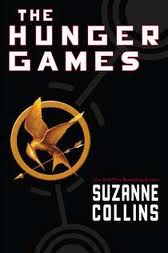
The Hunger Games, Suzanne Collins-Yes, I know it's YA and people are probably tired of hearing about it, but this book is so full of social commentary that I hope teachers are actively teaching with it 30 years from now-and that we have not yet taken our voyeurism and "reality" tv to that extreme.


The Harry Potter Series-Basically for the same reason as The Hunger Games.  Underlying the magic and whimsical elements is a solid foundation of social justice and equality.


The Time Traveler's Wife, Audrey Niffenegger-OK, this one is mostly on the list just because I loved it so, but it does have some interesting things to say about the nature of relationships.

Oryx and Crake and The Year of the Flood, Margaret Atwood-What The Handmaid's Tale did in highlighting reproductive choice, these books do for environmental issues, with some feminism thrown in.

Nickel and Dimed, Barbara Ehrenreich-This book puts the lie to the conservative claim that if you have a job and work hard you will get ahead in American.  Not if you are working for minimum wage, and Ehrenreich lived it to prove it.


The Book Thief, Markus Zusak-Amazingly beautiful, heart-breaking, transcendent and brutal, reading this book made me understand how the Nazi's affected the everyday German, and it is a great picture of courage.

Monster, Walter Dean Myers-Another YA title, this book illuminates the way that poverty and the need to survive can make people act against their own interests, and how incarceration affects teens.


Saturday, May 26, 2012

Cross-Blog Pollination-I am Nujood, Age 10 and Divorced


I posted this review first on my children's and young adult book blog, Second Childhood Reviews this morning, and while I don't usually review the children's and YA books I read here on this blog (after all, that's why I have two!), this book is worth sharing with a wider audience.  I imagine my own daughter at 10, and can only feel rage at a society that allows-hell, encourages-the sexual assault and physical abuse of young girls.


Summary:  (from publisher)
Forced by her father to marry a man three times her age, young Nujood Ali was sent away from her parents and beloved sisters and made to live with her husband and his family in an isolated village in rural Yemen. There she suffered daily from physical and emotional abuse by her mother-in-law and nightly at the rough hands of her spouse. Flouting his oath to wait to have sexual relations with Nujood until she was no longer a child, he took her virginity on their wedding night. She was only ten years old.

Unable to endure the pain and distress any longer, Nujood fled—not for home, but to the courthouse of the capital, paying for a taxi ride with a few precious coins of bread money. When a renowned Yemeni lawyer heard about the young victim, she took on Nujood’s case and fought the archaic system in a country where almost half the girls are married while still under the legal age. Since their unprecedented victory in April 2008, Nujood’s courageous defiance of both Yemeni customs and her own family has attracted a storm of international attention. Her story even incited change in Yemen and other Middle Eastern countries, where underage marriage laws are being increasingly enforced and other child brides have been granted divorces.


Review:
Nujood's story is simply but powerfully written.  Detailing a loss of innocence that was made all the more brutal for coming from the betrayal of her parents, I Am Nujood is both an easy and a difficult read.  While the sexual assaults that she endured daily are only described in much detail once, the effect of it on her is both tragic and ultimately redemptive.  Despite all teachings to the contrary, Nujood refuses to accept that her fate as a woman is to be beaten and raped by her "husband", showing a bravery that not many adult women in repressive societies do.  Her determination to move forward and help other girls is an example to any survivors of domestic violence and sexual assault, whether from countries where the practice is societally supported or from more "enlightened" countries like America, where supposedly we value women more.


But this book is much more than one personal story of survival and redemption.  This book can be used to highlight the very real problem of forced child marriage that exists in parts of the developing world.  Unicef estimates that in Africa, there the practice is prevalent, 42% of girls will be married before the age of 18, many without their consent.  This means that a lack of formal schooling and a separation from the rest of society will only lead to a perpetuation of the cycle for their daughters.  Child marriage is most often the result of poverty combined with a  rigid sense of honor.  This sense of having to "honor" the family by putting up with abuse is pervasive and makes girls in this situation feel ashamed of their desire not to be married.  There is much work to be done to help women world-wide gain the education and rights necessary for them to have true self-determination, not to have to choose between the equally unacceptable alternatives of staying with their family and starving or being forced into a marriage with an older man and enduring whatever abuse he chooses to throw her way.  


While the reading level for this book is quite low, the content is mature, and should it should be read with guidance by younger teens.  I believe that it could be a very powerful book to use in the classroom, however, not necessarily for its literary merit as much as for the issues it raises about human rights.  While the description of Nujood's rape on the first night of her marriage is disturbing, it is not graphic in nature in terms of language.  I believe that it would make an excellent addition to any high school literature or social sciences curriculum, and that it could be used as a jumping-off point for a unit on the status of girl children throughout the world.

Tuesday, May 15, 2012

Her Name was Mary Sutter...

and sadly, I didn't really care.  My Name is Mary Sutter, by Robin Oliveira, details the story of Mary Sutter, a wealthy midwife living in Albany, New York at the outbreak of the Civil War.  Her one dream is to become a surgeon, but she has been turned down by every medical school and doctor in Albany.  When the war starts, she sees her chance to get into the field of medicine by becoming part of Dorothea Dix's nurses corps.  She travels to Washington, DC and bullies herself into a position at the Union Hotel Hospital.  And then there's some family tragedy, and some arguments with the head doctor, and some gruesome descriptions of injuries and disease...and then I gave up.

Everything about this book makes it something I should enjoy.  The genre, the theme, the feminist message-all things that resonate with me as a reader and a woman.  However, I found myself unable to work up much caring about the characters or what was happening to them.  The story was slow moving, the characters all annoyed me at some point or another-and not in a good, "ooo, I love to hate them" sort of way-and the descriptions of the barbaric state of medicine during that time were more disgusting than instructive.  Ordinarily I enjoy reading about the political machinations that lead to major world events, but even the political insights into the disorganization and incompetence that resulted in a greater human toll than necessary couldn't keep me going.  I will admit I stopped about 220 pages in-even though that was 2/3 of the way through,  I have too many other things to read to spend any more time on a book that was clearly not doing anything for me, intellectually, spiritually, or from an entertainment stand-point.  I assume since this book was nominated for the Orange Prize** that other people must have enjoyed it more than me, so give it a try if it sounds good to you.  You can tell me how it ended.

**Apparently, it did not in fact get nominated for the Orange Prize-as Ms. Oliveira herself was kind enough to point out in a comment below.  Darn TBR piles and their lack of appropriate organization!

Monday, April 23, 2012

It's Monday, What Are You Reading?

Good morning, fellow Monday Morning Readers!  It's been a long time since I have been able to participate in a weekly meme of any kind, so welcome to Book Addict Reviews any fellow bloggers who have not been here before!  I'm glad to be back!

This week, I finished When She Woke by Hillary Jordan.  Amazing speculative fiction a la The Handmaid's Tale about a woman's place in society and reproductive choice.


I am also reading The Latte Rebellion, by Sarah Jamila Stevenson.  This young adult novel tells the story of a group of mixed race friends who start a website to sell t-shirts to people with latte-colored skin as a way to raise money for a summer vacation.  What starts as a joke about their shared experiences as people of mixed racial backgrounds becomes a social justice movement, leading to serious consequences for the girls when their school labels them terrorists.


I'm about to start My Name is Mary Sutter, a historical fiction novel about a woman fighting to be recognized for her medical skills in the mid-18th century.  I guess I must be on a feminist fiction kick right now, since the last few things I have read are falling in that theme.  Given the current state of political discourse about women in this country, I guess maybe that makes sense...


Finally, I am listening to The Grapes of Wrath on audiobook.  I'm glad that I decided to listen rather than read it, because I really feel like the narrator is doing a wonderful job with the character's voices and emotions.  It is the tale of the Joad family-chased off their land during the Depression by the landowners and their tractors, the family takes off west in a converted jalopy, hoping to find work and prosperity in the promised land of California.  Heartbreaking, infuriating, filled with moments of quiet grace, this American classic is a must read.


Have a wonderful reading week, everyone!

Saturday, April 7, 2012

How I Was Defeated By Middlemarch

I will admit it- hell, I have admitted it.  A rather large (too large?) part of my identity is wrapped up in not just being a reader, but in being well-read.  Sure, I've lied about reading books that I really only started and couldn't finish because they are high-faultin' classics that make me sound smart...haven't we all? (please, don't judge).  But just this once I am going to come clean-I was defeated by George Eliot and her classic Middlemarch.

There is nothing about Middlemarch that I shouldn't love as a reader and a feminist.  Female author fools the world by writing as a man to get her novel about a young woman  bucking the system taken seriously.  With themes of a women's role in society, religious hypocrisy, and political reform-if this book was tea I would want to drink it.  But apparently the book itself is better for me in the abstract than in the reality.  I simply could not get through it.

I first tried to read it in college, during a summer when I was determined to read the classics-with-a-capital-C.  I re-read Jane Eyre that summer, as well as Wuthering Heights, The Old Man and The Sea, and A Tale of Two Cities.  But when I tried to read Middlemarch, I found myself putting it down in favor of doing things like, oh, scrubbing the grout with a toothbrush or hand-waxing my 10 year old Renault.  I was relieved when it came time to go back to school and have an excuse to put it aside "for the semester"-you know, if a semester lasted 20 years.

OK, enter the advent of digital audiobooks.  Surely, if I could listen to a really good narrator read the words aloud, I would be able to get invested in the emotional life of the characters and not be distracted by the old-fashioned language.  Surely, the voice of the narrator would bring to life the long passages where Dorothea is rhapsodizing about Mr. Casaubon in her head, all he's-so-righteous-so-what-if-he-is-pedantic-and-old-and-not-that-attractive.  "And the audio version is 30 hours long, so I will certainly get my money's worth!", thought I.  Well, there's $14.95 wasted...I couldn't even get through the first two hours.  I listen as I drive, and I found my thoughts drifting to such an extent that I would realize I was home and could not list one event from the preceding 25 minutes.  So, I hereby admit defeat.  Go ahead and feel smug, all you Smarty McSmartypants who actually read this book.  Hmmmm, or did you?

Tuesday, August 2, 2011

Kindred, by Octavia Butler

Any long time readers of this blog know my deep respect for Octavia Butler.  She takes the genre of science fiction and turns it into literature that not even the most pernicious lit snob can say is anything other than high quality.  Kindred, Butler's best known work, is perhaps the clearest example I've yet read of the way that she combines issues of race, gender, and class into her work.

Kindred is the story of Dana, a black woman living in California in the 1970s.  Through some process never fully explained, Dana is transported back to the early 1800s whenever Rufus, her white great-great-great-great (you get the idea) grandfather is on the verge of getting himself killed.  Unfortunately for Dana, this unknown ancestor is also the son of a slave-owner in Maryland.  This means that once she is back in time with him, she must adjust her life to the customs of the time, acting the part of a slave.  As Dana travels back and forth between the past and the present, she learns more about what it meant to be black and powerless in the United States than she ever wanted to.  What was abstract to her and her white husband in 1976 becomes terrifyingly concrete in the world of 1830s Maryland.

Kindred is a bit of a cross-over novel, as the science fiction aspect of it is not nearly as important as the story itself.   Perhaps that's why it is her most popular novel, because you don't have to be a science fiction fan to enjoy it.  But I suspect it has more to do with the examination of race and slavery than with a genre preference.  Through Dana's experiences, Butler shows the brutality and cruelty of slavery.  Dana, with her 20th century moral superiority, begins by "acting" as a slave, but after being whipped, beaten, forced into the fields, and nearly raped, she comes to realize how easily people can be made slaves.  Take away a person's humanity, and they will believe they are less than human.  Value a person only because of the work that they can do or the price that they will fetch, and they will start to define themselves that way, even contribute to their own captivity.

It is this idea that is perhaps the most striking in Butler's work, especially given the 1979 release date.  That close to the heyday of the civil rights movement, it must have been a risk for Butler to create the characters of Rufus, who while not likeable does at least become understandable as the slave owner's son, and eventual slave owner himself.  Even though Dana hates what he does, she can't quite bring herself to hate him, though he certainly gives her ample reasons to do so.  But Dana's relationship with Rufus, and the various attitudes of other slaves on the plantation, demonstrate that slavery and people's attitudes towards it were not as clear-cut as history books would make them out to be.  To be sure, the institution of slavery is abhorrent, but those living within it sometimes had to do things that should not necessarily be judged by 20th (or 21st) century standards.  Butler clearly shows how insidious the effects of living under such a brutal system can be, from the need to run away again and again, even after the most horrific beatings, to the need to try and secure your place by serving up another slave's transgressions to your masters, even though you know what the consequences for them will be.  In the end, Dana is able to retain enough of her 20th century self to free herself from the bondage imposed on her by the involuntary time travel, but not without scars, both physical and emotional, that will leave a permanent impression on her, and on the reader.

Wednesday, January 19, 2011

The Year of the Flood, by Margaret Atwood

There are some authors whose books I will read regardless of what they are about.  Often, I don't even know what they are about, because if I see the author's name on the cover I don't even bother to read the synopsis.  There aren't many of them, but one of my must-read authors is Margaret Atwood.  Ever since reading The Handmaid's Tale in college I have been a huge fan of her work.  The Handmaid's Tale literally changed my life.  Before then, I called myself a feminist because I was raised to believe that men and women are equal, but I had never really thought deeply about the issues that kept women from being full participants in the world's political and social realms.  Reading The Handmaid's Tale was an "ah ha" moment for me, when I began to truly understand the moral and ethical questions behind feminism specifically, and social justice movements in general. While none of her other books has had quite the same effect on me, I have read all of them with a sense of wonder and admiration at Atwood's ability to create characters and stories that examine some of our most complex social dilemmas, not to mention her ability to use language in a way that is sometimes raw and powerful, and other times transcendentally beautiful.


The Year of the Flood is her latest novel, and it is a "sequel" to her novel Oryx and Crake, though much of it takes place during the same time period as the first, focusing on different characters.  The novel is set in the not-so-distant future, when corporations have attained global dominance, and the planet is quickly apporaching ecological disaster.  It is centered around two female protagonists, Ren and Toby.  Both become a part of an eco-cult called God's Gardeners, a group who eschews the technological advances of modern society and preaches a return to the days when food actually came from nature and people were not treated as fodder-either labor or consumer- for the large corporations.  They believe that a "waterless flood" is coming, one that will sweep away all of mankind's corruption of the natural world, and they want to be prepared when it does.

As dystopian fiction goes, Atwood's near-future is as gritty and dark as can be imagined.  Human depredation has reached new levels, with the corporations greedily commodatizing all aspects of human life, including the sex trade and drug trafficking.  Most of the population lives on the edges of society, scraping by in whatever way-legal or illegal-they can find.  Anyone who runs afoul of the corporations can find themselves snatched off the street by the CorpSeCorp, the security arm of the multinationals that has replaced the armed forces and police.  While the richest and smartest live in walled compounds run by the corporations, the rest are left in slums called the "pleebs".  In the dangerous, crime-ridden world of the pleebs, helping your neighbor is likely to get you arrested or killed, and so a self-defeating selfishness has become the norm.  Like all repressive governments, the complete control of the CorpSeCorp has turned person again person, causing them to act in ways that are against their own interest.

As speculative fiction goes, I sincerely hope that the future Atwood envisions is wrong, wrong, wrong.  Sadly, too much of it felt completely possible to me.  From genetic manipulation to the power of the corporations to the suppression of dissent and the oppression of the people in the name of making money-all too close to reality.  In addition, now that most reputable scientists and rational people have come to accept global warming as a fact, it is not too much of a stretch to think that the destruction of the natural world that prefaces so much of what happens in the book could be around the corner.

Sounds depressing, right?  And this book certainly has its highs and lows in terms of emotional impact.  But ultimately there is hope.  When the "waterless" flood finally comes, those people who learned about the natural world and how to survive without technology and consumer goods were able to survive the chaos of the de-evolution of our society, and were able to begin rebuilding a world more in balance with nature.  As The Year of the Flood ends, the survivors are still finding each other, and I can't help but wonder what the next months and years hold for them.  Several websites I've found have described this book as the second in the MaddAdam trilogy, so I assume that I may yet get my wish to find out if there is indeed hope for the future-of Atwood's fictional society, and for ours.

Tuesday, April 6, 2010

Top Ten Picks-Books You Have To Read At Least Once

Thanks to Jillian at Random Ramblings for hosting this meme.  This week's topic-books you should read at least once.  I'm going to stick with late 20th-21st century titles-while I appreciate the genius of authors like Austen, Hemingway, and Lewis I'm itching to update the list a little.  I'm noticing a lot of feminist and/or social justice literature on here.  I guess you really can judge a person at least a little by their reading material!

1.  The Handmaid's Tale-Margaret Atwood

    This book is incredibly intellectual while still being accessible.  Atwood takes the idea of women as chattel to its not entirely unbelievable extreme.   A great way for new readers of feminist fiction to get into the genre.  Love everything Atwood ever wrote, but this one inspired me the most.

2.  Stone Butch Blues-Leslie Feinberg
  
      I know that most people have probably never heard of this book or this author,  Leslie Feinberg, but ze is one of the most influential writers in the world of GLBT literature, specifically around issues of gender identity.  The "ze" label is deliberate-Feinberg rejects traditional definitions of gender in favor of a more global perspective on what it means to be human, regardless of the genitalia you happen to have been born with.  In this, per first novel, ze tells the story (mostly autobiographical) of coming up as a young butch lesbian in the 60s, pre-Stonewall.  Great, touching, moving read!


3.  Paradise-Toni Morrison

     I firmly believe that this is her best book, despite the number of people who seem to think that Beloved takes that prize.  I love the way that time is fluid and non-linear in so many of her books, and the juxtaposition of the nuns and the village in this one makes fr fascinating reading.


4.  Stranger in a Strange Land-Robert Heinlein

     This book takes every idea about love and sex and culture and turns it on its head.  Even if you are not a fan of science fiction this one is sure to give you something to think about.


5.  A Thousand Splendid Suns-Khaled Hosseini

     Anyone wanting to understand Afghanistan, and why it shouldn't have taken 9-11 for the US to do something about the Taliban, should read this book.  Heartbreakingly written, intimate and tragic, this book is one of the best I have read-ever.


6.  Savage Inequalities-Jonathan Kozol

     I'm not usually a huge fan of non-fiction, but Jonathan Kozol's work is powerful.  This book is about the inequalities that exist in America's schools, and he examines the racial and socioeconomic politics that leads them to be the way they are.  He makes a strong argument that until we address these inequities we will continue to have generational poverty, racism, and class warfare in our country.


7.  The Time Traveller's Wife, Audrey Niffenegger

     This is one of the most moving love stories I have ever read, and one of the best written books I have seen in a long time.  The plot is so complex and ingeniously structured...it's not often that an author can completely surprise me with something new, but Niffenegger did it.


8.  Possessing the Secret of Joy-Alice Walker

     Walker takes a minor character from The Color Purple (arguably another book everyone should read), and creates a story around her that examines what it means to break taboos.  While the main topic of this novel, female genital mutilation, is clearly not the most uplifting subject, the way that the book examines the practice and the main character's decision to undergo the process is powerful and moving.


9.  The Giver-Lois Lowry
This may be a young adult novel, but the there is enough here for the most intellectual adult reader to chew on. Science fiction that doesn't feel like science fiction, with an ending that leaves you wondering (at least, until you read the sequel) 

10.  Prodigal Summer-Barbara Kingsolver

     Beautifully written, this novel explores the idea that humans, rather than being above nature, are in fact undeniably a part of the rhythms and cycles of the world, driven as much by biological forces as rational.  Kingsolver's explorations of the place of body and heart in our lives is full of stunning descriptions of the natural world and tons of emotion.  The book is unashamedly a treatise on treating the natural world with respect and reverence, but the environmentalism never becomes preachy or cliche.