Conservatives love to harken back to the good ol' days, when men and women knew their roles and the family was strong and sacred. In fact, the main argument that conservatives have against gay marriage is that we were all so much better off when the nuclear family was defined as a husband and his obedient wife and children.
Here's the thing-that ideal was never the norm. Sure, there were families that resembled the 1950's stereotype a la Leave It to Beaver, but look at the statistic about how many poor mothers had to work, and how many middle-class mothers had substance abuse problems, and they tell a different story. This state of affairs is beautifully illustrated in A. Manette Ansay in her novel Vinegar Hill. Vinegar Hill tells the story of Ellen Grier and her family in 1960s Wisconsin. When her husband loses his job in Illinois, he moves the wife and kids back to their hometown to stay with his parents. Ellen, a school-teacher from a devout Catholic family, chafes under her mother-in-law's disapproval and her father-in-laws cruelty. Her husband find living with the father who abused him as a child drains all energy and ambition from him. He turns away from his wife and their children, paralyzed by his memories and his crushing fear that he will not be able to keep his family safe. Underlying all of this misery is a family secret that has warped the minds and hearts of everyone involved, creating antipathy and unhappiness.
Much of the novel focuses on the strict gender roles that each member of the family was expected to play. Ellen's mother-in-law and her own mother are disapproving of her career, believing that she should be at home taking care of the children. Her father-in-law believes himself to be the head of his wife, and expects her-and everyone else-to submit to his every command. The crushing disappointment that Ellen feels in her marriage and the feeling of being trapped in an unhappy life lead her to take long walks alone at night, and eventually leads to substance abuse. Her mother-in-law is just as unhappy, having lived her adult life under the thumb of an abusive husband. And her husband's unmarried aunt is perhaps the most miserable, feeling as she does that she was never able to measure up to her more attractive sister, and bearing most of the guilt for the family secret that eventually comes to light.
An action-packed novel this is not. What action there is takes place almost exclusively within the narrow confines of the family home. But despite that, the novel feels full. Full of repressed emotions, quiet sadness, mini-explosions of anger. Ansay has captured the slow, inexorable march of the unfulfilled life. Even when Ellen makes a decision that will better the lives of her and her children it doesn't feel joyous. It's just another sad event in the sad life of a sad woman. But Ansay leaves us with hope that things can and will get better for Ellen, even if she and her children are the only ones who pull themselves out of the emotional morass that is their family.
Showing posts with label women. Show all posts
Monday, June 4, 2012
Monday, May 28, 2012
These Things Hidden, Heather Gudenkauf
Adolescence is a time of transition, a time in a child's life when they are not yet adults, but not really children. This makes it a challenge to decide how to deal with them-finding a balance between supervision and freedom, support and independence, is something that parents and society struggle with. And when the adolescent commits a crime, we as a society have trouble finding that balance-are they children who cannot be held accountable for their choices, or are they adults who have defied societal standards and must be punished. I was reminded of this dilemma while reading Heather Gudekauf's novel These Things Hidden.
These Things Hidden interweaves the lives of four women-Allison, Brynn, Charm, and Claire. Five years earlier, 16 year old Allison was convicted of manslaughter in the death of her newborn infant. Released from prison early, she goes to a half-way house and tries to reconnect with her sister, Brynn. Brynn, who at 15 was with her sister on that awful night, has borne the brunt of the fall-out of her sister's crime. Emotionally fragile, bearing the guilt of the infant's death, she struggles to get through each day. Charm, a 20 year old college student, carries a secret that makes it difficult for her to deal with the imminent death of her step-father. Claire, a bookstore owner, marvels daily at the miracle that brought her son Joshua into her life-after years of trying to have a child, she and her husband adopted Joshua after he was left at the fire station as a newborn. None of these women know it, but Joshua is the one thing that connects them all.
Told in the first person by Allison and Brynn, with chapters in the third person for Charm and Claire, this book is about more than just the fairness of holding a 16 year old responsible for the death of her child. It is about family, what it means to be a mother, a sister, a caregiver. Allison and Brynn's parents appeared perfect from the outside, giving their girls every advantage. But emotionally there was very little connection in their family, and when first Allison and then Brynn disappoint them, their parents turn away from them. Charm's mother collected men like trading cards for many years, and Charm feels much closer to her stepfather Gus than to her biological parents. Obviously simply giving birth to a child does not make a person a parent. Claire and her husband are excellent parents to Joshua, but they live with the fear at the back of their mind that his biological parents could show up and ruin their happiness. Gudenkauf paints a portrait of love and guilt and fear and love again through the stories of these women and the ways they are connected to Joshua, and to each other. This novel is women's fiction at its best. Not overly sentimental or sappy, with no easy solutions, the book explores relationships and family in a way that is insightful and engaging.
These Things Hidden interweaves the lives of four women-Allison, Brynn, Charm, and Claire. Five years earlier, 16 year old Allison was convicted of manslaughter in the death of her newborn infant. Released from prison early, she goes to a half-way house and tries to reconnect with her sister, Brynn. Brynn, who at 15 was with her sister on that awful night, has borne the brunt of the fall-out of her sister's crime. Emotionally fragile, bearing the guilt of the infant's death, she struggles to get through each day. Charm, a 20 year old college student, carries a secret that makes it difficult for her to deal with the imminent death of her step-father. Claire, a bookstore owner, marvels daily at the miracle that brought her son Joshua into her life-after years of trying to have a child, she and her husband adopted Joshua after he was left at the fire station as a newborn. None of these women know it, but Joshua is the one thing that connects them all.
Told in the first person by Allison and Brynn, with chapters in the third person for Charm and Claire, this book is about more than just the fairness of holding a 16 year old responsible for the death of her child. It is about family, what it means to be a mother, a sister, a caregiver. Allison and Brynn's parents appeared perfect from the outside, giving their girls every advantage. But emotionally there was very little connection in their family, and when first Allison and then Brynn disappoint them, their parents turn away from them. Charm's mother collected men like trading cards for many years, and Charm feels much closer to her stepfather Gus than to her biological parents. Obviously simply giving birth to a child does not make a person a parent. Claire and her husband are excellent parents to Joshua, but they live with the fear at the back of their mind that his biological parents could show up and ruin their happiness. Gudenkauf paints a portrait of love and guilt and fear and love again through the stories of these women and the ways they are connected to Joshua, and to each other. This novel is women's fiction at its best. Not overly sentimental or sappy, with no easy solutions, the book explores relationships and family in a way that is insightful and engaging.
Monday, April 23, 2012
It's Monday, What Are You Reading?
Good morning, fellow Monday Morning Readers! It's been a long time since I have been able to participate in a weekly meme of any kind, so welcome to Book Addict Reviews any fellow bloggers who have not been here before! I'm glad to be back!
This week, I finished When She Woke by Hillary Jordan. Amazing speculative fiction a la The Handmaid's Tale about a woman's place in society and reproductive choice.
I am also reading The Latte Rebellion, by Sarah Jamila Stevenson. This young adult novel tells the story of a group of mixed race friends who start a website to sell t-shirts to people with latte-colored skin as a way to raise money for a summer vacation. What starts as a joke about their shared experiences as people of mixed racial backgrounds becomes a social justice movement, leading to serious consequences for the girls when their school labels them terrorists.
I'm about to start My Name is Mary Sutter, a historical fiction novel about a woman fighting to be recognized for her medical skills in the mid-18th century. I guess I must be on a feminist fiction kick right now, since the last few things I have read are falling in that theme. Given the current state of political discourse about women in this country, I guess maybe that makes sense...
Finally, I am listening to The Grapes of Wrath on audiobook. I'm glad that I decided to listen rather than read it, because I really feel like the narrator is doing a wonderful job with the character's voices and emotions. It is the tale of the Joad family-chased off their land during the Depression by the landowners and their tractors, the family takes off west in a converted jalopy, hoping to find work and prosperity in the promised land of California. Heartbreaking, infuriating, filled with moments of quiet grace, this American classic is a must read.
Have a wonderful reading week, everyone!
This week, I finished When She Woke by Hillary Jordan. Amazing speculative fiction a la The Handmaid's Tale about a woman's place in society and reproductive choice.
I am also reading The Latte Rebellion, by Sarah Jamila Stevenson. This young adult novel tells the story of a group of mixed race friends who start a website to sell t-shirts to people with latte-colored skin as a way to raise money for a summer vacation. What starts as a joke about their shared experiences as people of mixed racial backgrounds becomes a social justice movement, leading to serious consequences for the girls when their school labels them terrorists.
I'm about to start My Name is Mary Sutter, a historical fiction novel about a woman fighting to be recognized for her medical skills in the mid-18th century. I guess I must be on a feminist fiction kick right now, since the last few things I have read are falling in that theme. Given the current state of political discourse about women in this country, I guess maybe that makes sense...
Finally, I am listening to The Grapes of Wrath on audiobook. I'm glad that I decided to listen rather than read it, because I really feel like the narrator is doing a wonderful job with the character's voices and emotions. It is the tale of the Joad family-chased off their land during the Depression by the landowners and their tractors, the family takes off west in a converted jalopy, hoping to find work and prosperity in the promised land of California. Heartbreaking, infuriating, filled with moments of quiet grace, this American classic is a must read.
Have a wonderful reading week, everyone!
Sunday, April 22, 2012
When She Woke, AKA The Handmaid's Tale for the 21st Century
I think I have mentioned here on the blog before that while I was raised by a feminist and called myself a feminist even as a young teen, I didn't really get feminism until I read Margaret Atwood's A Handmaid's Tale. Atwood is a master of speculative fiction, and her chilling vision of what might become of women in a future where our reproduction is controlled by men made me understand just how precious freedom of choice is, and how hard we have to work to ensure it.
While The Handmaid's Tale is powerful and disturbing, at the time it was written the fictional future it reflected, while not unrealistic, felt far away. The near future world created by Hillary Jordan in her speculative fiction novel, When She Woke, feels frighteningly plausible and terrifyingly close. Centered around the same themes as Atwood's classic feminist novel, but updated with 21st century geo-politics and technology, When She Woke tells the story of Hannah, a young woman from a fundamentalist religious background, who was convicted of murder after getting an illegal abortion. In this near future, a sexually transmitted disease, carried by men but affecting only women, has rendered a large portion of the female population infertile. In the panic that ensued, the United States overturned Roe v. Wade. In addition, an economic depression led to the closure of prisons in favor of melachroming convicted criminals-literally changing their skin color to green or yellow or blue or red depending on their crime. Hannah wakes up as a Red, the color of murderers. When she is released from her detention, she becomes a social outcast. Her family essentially disowns her for taking the life of her unborn child, and they send her to an enlightenment camp to try and "save" her and help her return to God. But enlightenment means facing daily cruelty and abuse, and eventually Hannah is forced to leave. Thus begins a journey from powerless to powerful; from weakness to strength; from blind, unquestioning faith to a new understanding of God and his relationship to the evil "others"-atheists, homosexuals, abortionists, socialists, non-Christians-she has always been taught to fear and hate.
The title refers not just to the day that Hannah woke up as a Red, but to the very real awakening of her ability to think for herself, to question her almost slavish devotion to her evangelical brand of Christianity, to envision a life for herself where she decides her path, rather than having it laid out before her by her father and then her husband. The real world is a shock to someone as sheltered from it has Hannah had been. Hannah comes to understand that morality is much more complex than the narrow, black-and-white worldview of her conservative faith. How to rationalize the cruelty of her fellow Christians, or the kindness of the unsaved, when she has been taught that strict adherence to God's law-as interpreted by preachers, fathers, and husbands-is the only way to please God and achieve a place in heaven.
When She Woke lacks the amazing facility with language that Atwood's work always displays. But what it lacks in literary-ness it makes up for in strong characterization and a quick-paced, exciting story. Hannah has a rich internal life, and the journey that she takes-both physical and spiritual-as a result of her status as a Chrome is deeply moving. But what struck me even more was how authentic the made-up future felt. Global pandemic, war with Iran, water wars in Africa, the rise of religious fundamentalism...every one a possible outcome of the current state of our world. Is it implausible that Iran could get a nuclear weapon and bomb the US? It might not be likely, but it's certainly not impossible. Experts have been warning about wars over water for at least the last decade. Bird flu, swine flu, SARS-we've seen just how our increasingly global culture can lead to the spread of disease. And the beliefs of the religious extremists in this book are awfully close to the Pat Robertson/Rick Santorum version of today-except it has become the law of the land. How much would it take for the Promise Keepers to become the fictional Fist of God-a group that hunts down and exterminates anyone it perceives as immoral? When She Woke is a powerful wake-up call for anyone who cares about reproductive rights, the separation of church and state, or social justice.
While The Handmaid's Tale is powerful and disturbing, at the time it was written the fictional future it reflected, while not unrealistic, felt far away. The near future world created by Hillary Jordan in her speculative fiction novel, When She Woke, feels frighteningly plausible and terrifyingly close. Centered around the same themes as Atwood's classic feminist novel, but updated with 21st century geo-politics and technology, When She Woke tells the story of Hannah, a young woman from a fundamentalist religious background, who was convicted of murder after getting an illegal abortion. In this near future, a sexually transmitted disease, carried by men but affecting only women, has rendered a large portion of the female population infertile. In the panic that ensued, the United States overturned Roe v. Wade. In addition, an economic depression led to the closure of prisons in favor of melachroming convicted criminals-literally changing their skin color to green or yellow or blue or red depending on their crime. Hannah wakes up as a Red, the color of murderers. When she is released from her detention, she becomes a social outcast. Her family essentially disowns her for taking the life of her unborn child, and they send her to an enlightenment camp to try and "save" her and help her return to God. But enlightenment means facing daily cruelty and abuse, and eventually Hannah is forced to leave. Thus begins a journey from powerless to powerful; from weakness to strength; from blind, unquestioning faith to a new understanding of God and his relationship to the evil "others"-atheists, homosexuals, abortionists, socialists, non-Christians-she has always been taught to fear and hate.
The title refers not just to the day that Hannah woke up as a Red, but to the very real awakening of her ability to think for herself, to question her almost slavish devotion to her evangelical brand of Christianity, to envision a life for herself where she decides her path, rather than having it laid out before her by her father and then her husband. The real world is a shock to someone as sheltered from it has Hannah had been. Hannah comes to understand that morality is much more complex than the narrow, black-and-white worldview of her conservative faith. How to rationalize the cruelty of her fellow Christians, or the kindness of the unsaved, when she has been taught that strict adherence to God's law-as interpreted by preachers, fathers, and husbands-is the only way to please God and achieve a place in heaven.
When She Woke lacks the amazing facility with language that Atwood's work always displays. But what it lacks in literary-ness it makes up for in strong characterization and a quick-paced, exciting story. Hannah has a rich internal life, and the journey that she takes-both physical and spiritual-as a result of her status as a Chrome is deeply moving. But what struck me even more was how authentic the made-up future felt. Global pandemic, war with Iran, water wars in Africa, the rise of religious fundamentalism...every one a possible outcome of the current state of our world. Is it implausible that Iran could get a nuclear weapon and bomb the US? It might not be likely, but it's certainly not impossible. Experts have been warning about wars over water for at least the last decade. Bird flu, swine flu, SARS-we've seen just how our increasingly global culture can lead to the spread of disease. And the beliefs of the religious extremists in this book are awfully close to the Pat Robertson/Rick Santorum version of today-except it has become the law of the land. How much would it take for the Promise Keepers to become the fictional Fist of God-a group that hunts down and exterminates anyone it perceives as immoral? When She Woke is a powerful wake-up call for anyone who cares about reproductive rights, the separation of church and state, or social justice.
Saturday, April 7, 2012
How I Was Defeated By Middlemarch
I will admit it- hell, I have admitted it. A rather large (too large?) part of my identity is wrapped up in not just being a reader, but in being well-read. Sure, I've lied about reading books that I really only started and couldn't finish because they are high-faultin' classics that make me sound smart...haven't we all? (please, don't judge). But just this once I am going to come clean-I was defeated by George Eliot and her classic Middlemarch.
There is nothing about Middlemarch that I shouldn't love as a reader and a feminist. Female author fools the world by writing as a man to get her novel about a young woman bucking the system taken seriously. With themes of a women's role in society, religious hypocrisy, and political reform-if this book was tea I would want to drink it. But apparently the book itself is better for me in the abstract than in the reality. I simply could not get through it.
I first tried to read it in college, during a summer when I was determined to read the classics-with-a-capital-C. I re-read Jane Eyre that summer, as well as Wuthering Heights, The Old Man and The Sea, and A Tale of Two Cities. But when I tried to read Middlemarch, I found myself putting it down in favor of doing things like, oh, scrubbing the grout with a toothbrush or hand-waxing my 10 year old Renault. I was relieved when it came time to go back to school and have an excuse to put it aside "for the semester"-you know, if a semester lasted 20 years.
OK, enter the advent of digital audiobooks. Surely, if I could listen to a really good narrator read the words aloud, I would be able to get invested in the emotional life of the characters and not be distracted by the old-fashioned language. Surely, the voice of the narrator would bring to life the long passages where Dorothea is rhapsodizing about Mr. Casaubon in her head, all he's-so-righteous-so-what-if-he-is-pedantic-and-old-and-not-that-attractive. "And the audio version is 30 hours long, so I will certainly get my money's worth!", thought I. Well, there's $14.95 wasted...I couldn't even get through the first two hours. I listen as I drive, and I found my thoughts drifting to such an extent that I would realize I was home and could not list one event from the preceding 25 minutes. So, I hereby admit defeat. Go ahead and feel smug, all you Smarty McSmartypants who actually read this book. Hmmmm, or did you?
There is nothing about Middlemarch that I shouldn't love as a reader and a feminist. Female author fools the world by writing as a man to get her novel about a young woman bucking the system taken seriously. With themes of a women's role in society, religious hypocrisy, and political reform-if this book was tea I would want to drink it. But apparently the book itself is better for me in the abstract than in the reality. I simply could not get through it.
I first tried to read it in college, during a summer when I was determined to read the classics-with-a-capital-C. I re-read Jane Eyre that summer, as well as Wuthering Heights, The Old Man and The Sea, and A Tale of Two Cities. But when I tried to read Middlemarch, I found myself putting it down in favor of doing things like, oh, scrubbing the grout with a toothbrush or hand-waxing my 10 year old Renault. I was relieved when it came time to go back to school and have an excuse to put it aside "for the semester"-you know, if a semester lasted 20 years.
OK, enter the advent of digital audiobooks. Surely, if I could listen to a really good narrator read the words aloud, I would be able to get invested in the emotional life of the characters and not be distracted by the old-fashioned language. Surely, the voice of the narrator would bring to life the long passages where Dorothea is rhapsodizing about Mr. Casaubon in her head, all he's-so-righteous-so-what-if-he-is-pedantic-and-old-and-not-that-attractive. "And the audio version is 30 hours long, so I will certainly get my money's worth!", thought I. Well, there's $14.95 wasted...I couldn't even get through the first two hours. I listen as I drive, and I found my thoughts drifting to such an extent that I would realize I was home and could not list one event from the preceding 25 minutes. So, I hereby admit defeat. Go ahead and feel smug, all you Smarty McSmartypants who actually read this book. Hmmmm, or did you?
Saturday, December 24, 2011
Life Sentences by Laura Lippman
For many years I prided myself on the fact that I never gave up on a book. Even if a book was not really doin' it for me, I stuck with it, sure that the author was trying to convey something that I just needed to work a little harder to pick up on. After all, they took the time and care to write the darn thing-I should at least put in the time and effort to finish it.
Then one day (perhaps struck by a growing sense of my own mortality) I decided that there are too many good books in the world to waste my precious reading time on bad ones, and I've put down many a snoozer since. But not my favorite authors. Surely if I have loved everything a person has ever written, then if I just keep slogging through one of their books I will find that moment of joy in the written word. Surely my favorite authors would not let me down?
Laura Lippman, I am sad to say, you've let me down.
Life Sentences is the story of Cassandra Fallows, an author who became successful writing about her father's infidelities and their affect on her. After writing a less-than-stellar novel, she goes home to Baltimore to mine her childhood friendships for another memoir, something that will take her back to her bestseller status. The irony is that in writing about an author who is afraid she's lost her mojo, Lippman has written a novel that shows that perhaps her mojo took a bit of a vacation.
The impetus for Cassandra's return to her childhood home is the story of an old schoolmate of hers who went to jail for seven years rather than reveal what happened to her infant, who disappeared and was never found. In revisiting her childhood friendships, Cassandra discovers just how fallible memory can be. Her old friends are upset with her portrayal of them in print, and they refuse to help her find their old classmate. Lots of intrigue ensues, revealing a conspiracy that involves politicians, blackmail, and twenty years of secrets.
To which I say "yawn". Lippman usually pairs really good character development with intriguing plots to create suspense novels that are not formulaic, but little windows into human behavior. Her novels usually carry some kind of emotional punch, but I found myself not really caring what happened to any of the characters, including the narrator. I made myself stick with it, partly for the reason above and partly because the mystery was (just) engaging enough to make me want to know how it resolved, but even the ending was a disappointment-more whimper than wow. Since this Lippman book is a stand-alone, I'd say skip it. Her Tess Monaghan books and other stand-alones are a much better use of your reading time!
Thursday, December 22, 2011
The Buddha in the Attic
The experience of immigrant groups in the United States is something that has interested me ever since I took a multicultural education class a few years ago. I read some really moving testimonials from people of various immigrant groups (beginning with Italians and the Irish and moving on through Chinese, Japanese, and Mexican) describing their experiences (or the family stories passed down by their grandparents) and how their families never gave up on making it in America.
My own family immigration history is fairly recent. My paternal grandparents came to America in the early 20th century from Quebec. They settled in New England, in an area where there was already a community for them to join. While my great-grandparents spoke Quebecois French almost exclusively, it did not take long for my grandmother and grandfather to learn English and assimilate into mainstream American culture. My grandfather fought in World War II, and was proud to serve the nation he saw as his, even though he had only been in the US for half of his rather short life at that point.
We as a society have never been particularly welcoming to new arrivals, regardless of where they are from or what the words on the Statue of Liberty may imply about how inclusive we pretend we are. The myth propagated is that as long as immigrants are willing to work-hard and respect American values we will accept them with open arms. The reality is that every immigrant group has started out on the lowest rung of American society, doing the jobs that no one wants to do, being discriminated against in public services, and being used as a pawn by politicians who want to scare people with the image of being overrun by the "other". Perhaps the most egregious case of this phenomenon happened to the Japanese in America during World War II. It is this immigrant experience that Julie Otsuka chronicles in her book The Buddha in the Attic.
Otsuka's book is written in the third person plural, from the perspective of women who were brought to the United States from Japan after World War I as wives to Japanese men they had never met. This rather interesting literary device is used to highlight the similarities of the immigrant experience for these women, even as it describes the variety of experiences that defined them as farm laborers, shop clerks, maids, and laundry workers. This very short novel, spare in its language, presents a portrait of women who try to find some way to survive in a world that has turned upside down, taking them away from everything they know to a world where not even the man they are going to marry is familiar. Through back-breaking, heartbreaking work, they bring children into the world, and watch them become more American than Japanese. Despite their fear that their children are moving away from them, they are hopeful that their futures will be better-until World War II brings it all crashing down around them again.
Like Otsuka's first book, When the Emperor Was Divine, The Buddha in the Attic is filled with carefully chosen words, meant to evoke specific ideas and feelings without extraneous language. While occasionally the long, collective paragraphs start to feel a bit listy, the book works because the snippets of women's stories that are elaborated upon are compelling enough to provide a frame for the rest. By the end I felt overwhelmed by the struggles of these women-and once more furious and regretful that it is my country, whose ideals I revere, that interned so many of our own citizens out of racial fear and prejudice.
Nothing speaks as well to the way that communities changed after internment as the last portion of the book. Suddenly, instead of the voices of the women, the narrator changes to a collective white American voice. That voice describes how ignorant and/or arrogant white society was during World War II, when any injustice could be justified if it was for "national security" purposes (Sound familiar? Patriot Act, anyone?). What was startling was not just that people seemed to approve of their improper jailing of their neighbors, but that any negative reaction to it came from a selfish concern about who would pick their crops/clean their shirts/scrub their toilets. As a reader, I couldn't help but wonder what happened to the women who's lives I had been invited into, and perhaps that's the most startling thing-that an entire group of people can just be disappeared while the rest of us go about our lives.
My own family immigration history is fairly recent. My paternal grandparents came to America in the early 20th century from Quebec. They settled in New England, in an area where there was already a community for them to join. While my great-grandparents spoke Quebecois French almost exclusively, it did not take long for my grandmother and grandfather to learn English and assimilate into mainstream American culture. My grandfather fought in World War II, and was proud to serve the nation he saw as his, even though he had only been in the US for half of his rather short life at that point.
We as a society have never been particularly welcoming to new arrivals, regardless of where they are from or what the words on the Statue of Liberty may imply about how inclusive we pretend we are. The myth propagated is that as long as immigrants are willing to work-hard and respect American values we will accept them with open arms. The reality is that every immigrant group has started out on the lowest rung of American society, doing the jobs that no one wants to do, being discriminated against in public services, and being used as a pawn by politicians who want to scare people with the image of being overrun by the "other". Perhaps the most egregious case of this phenomenon happened to the Japanese in America during World War II. It is this immigrant experience that Julie Otsuka chronicles in her book The Buddha in the Attic.Otsuka's book is written in the third person plural, from the perspective of women who were brought to the United States from Japan after World War I as wives to Japanese men they had never met. This rather interesting literary device is used to highlight the similarities of the immigrant experience for these women, even as it describes the variety of experiences that defined them as farm laborers, shop clerks, maids, and laundry workers. This very short novel, spare in its language, presents a portrait of women who try to find some way to survive in a world that has turned upside down, taking them away from everything they know to a world where not even the man they are going to marry is familiar. Through back-breaking, heartbreaking work, they bring children into the world, and watch them become more American than Japanese. Despite their fear that their children are moving away from them, they are hopeful that their futures will be better-until World War II brings it all crashing down around them again.
Like Otsuka's first book, When the Emperor Was Divine, The Buddha in the Attic is filled with carefully chosen words, meant to evoke specific ideas and feelings without extraneous language. While occasionally the long, collective paragraphs start to feel a bit listy, the book works because the snippets of women's stories that are elaborated upon are compelling enough to provide a frame for the rest. By the end I felt overwhelmed by the struggles of these women-and once more furious and regretful that it is my country, whose ideals I revere, that interned so many of our own citizens out of racial fear and prejudice.
Nothing speaks as well to the way that communities changed after internment as the last portion of the book. Suddenly, instead of the voices of the women, the narrator changes to a collective white American voice. That voice describes how ignorant and/or arrogant white society was during World War II, when any injustice could be justified if it was for "national security" purposes (Sound familiar? Patriot Act, anyone?). What was startling was not just that people seemed to approve of their improper jailing of their neighbors, but that any negative reaction to it came from a selfish concern about who would pick their crops/clean their shirts/scrub their toilets. As a reader, I couldn't help but wonder what happened to the women who's lives I had been invited into, and perhaps that's the most startling thing-that an entire group of people can just be disappeared while the rest of us go about our lives.
Tuesday, November 29, 2011
Between Friends, Debbie Macomber
I have always thought that the phrase "women's fiction" was somehow a slight (or not so slight) put down of the kind of stories that women find enjoyable or meaningful. While it is certainly not a universal fact that all women like to read stories about family, relationships, and friendships, it is certainly true that much of the fiction marketed to women as women's fiction is just that. I have mixed feelings about the type of novel that is labeled "women's fiction". Like any other genre, some is better written and more literary than others. On the spectrum from serious literature to fluff, I find myself most comfortable on the more literary end. The titles on the fluff end tend to feel a bit too much like a Lifetime Movie to me-trite, easy platitudes or oversimplified stories about complex issues of domestic violence, sexual assault, or family dynamics.
Sadly, my book club's November pick, Macomber's book Between Friends, falls a little too far to the fluff end for me. The epistolary novel is tells the story of two women, wealthy Jillian and her poor friend Lesley, who become friends as children and maintain that friendship throughout the trials and tribulations of their lives. While I don't have a problem with an epistolary novel in theory, in practice I find they often do more "telling" than "showing". Telling a story through a series of letters and other documents relieves the author of the need to actually develop characters, evoke feeling through setting or events, or write intelligent, meaningful dialogue. This book felt like a novel written in hearsay-there is little immediacy to the events, which I think takes away from any emotional impact.
I was also disturbed by how stereotypical the characters lives were. Lesley, the daughter of an abusive alcoholic, goes on to marry an abusive alcoholic after he gets her pregnant. Because she is a devout Catholic, she stays with him "for the children", and refuses to use birth control, ending up with three more children before she finally decides enough is enough. Jillian, the daughter of privilege, rebels in high school by falling in love with the gas jockey with a heart of gold-who just happens to get killed in Viet Nam, clearing the way for her to go on to the pricey private school and career as a lawyer that she was destined to have from the start. I can't cite too many other examples, mostly because I couldn't finish reading the book, but suffice it to say that I was unimpressed. One of the women in my book club reminded me that in the 1950s and 60s there were some women exactly like Lesley and Jillian. My response to her was, "I can acknowledge that without wanting to read a hole book about it."
My best friend has one other major complaint, which I share. Somehow these two women from Washington state, one of whom has only a high school education and rarely leaves her hometown, are connected to every major event in American life for 50 years. My friend called it "Forest Gump" syndrome, after that charming movie about mildly retarded Forest and his many brushes with greatness. Difference is, on screen it worked. In this book it just seems contrived. All in all, I'm pretty sure I will not be reading a Debbie Macomber book again any time soon.
Saturday, October 8, 2011
The Secret Daughter, Shilpi Gowda
A young wife in a rural village in India lies in a small hut, screaming with the pain of childbirth. The widwife tells her she has a daughter. Her husband comes to the hut to meet his son, and when he sees the baby is a girl, he takes her away to be killed. They can't afford a girl-a girl will not be able to do the hard manual labor, and for a girl they will need a dowry. The year was 1985.
That's right, 1985. As recently as the end of the 20th century, the culture of valuing boys more than girls was flourishing in places like India and China. Cultural practices regarding marriage and family, as well as the need for laborers to work on small subsistence farms, caused some families to abandon their newborn daughters to orphanages, or worse. In The Secret Daughter, Gowda tells the story of one such family. Kavita Merchant has three children. The first was taken away and killed at birth for being a girl. When the second girl, Usha, was born, she sneaked away from her husband and took the baby to an orphanage, so that at least she'd have some chance of a better life. The third, a boy, was cherished and celebrated by the family.
Usha was adopted by a couple from the United States, Krishnan and Somer Thakkar. Kris grew up in India wealthy and well-educated. Somer is as American as apple pie. After having multiple miscarriages, Kris convinces Somer that adoption from his home country is her chance to be a mother. Usha, now named Asha, comes to live with them when she is just one year old. She grows up surrounded by love and privilege, but it's not until a trip to India at 20 that she truly learns what her birth history and adoption mean to her life and the lives of her parents, biological and adoptive.
The story is told from the perspective of the two mothers for the first part of the book, and mostly from Asha's for the last portion, though her two fathers (bio and adoptive) also get short chapters from their point of view. It would be easy to demonize a society that throws away 5% of their girls (there is a 5% difference in the population of men versus women that can't be explained by natural or health factors), but Gowda shows both Kavita and her husband Jasu as real people who are faced with impossible decisions in order to survive crushing poverty. And while Somer seems like an easy choice for sympathetic character (inability to have children, swooping in to save a little brown baby from a third world orphanage), the fact is that she was pretty hard for me to like in this book. Once she has her daughter, she is constantly afraid that she won't really have a connection to her, because she looks more like her husband, and people in the streets don't know she is the girl's mother. She tries so hard to hold on to the girl that she ends up pushing her away, into the very thing that she feared most-a search for her biological parents. While Asha begins her journey as a spoiled, surly teen, what she finds on that search makes her reevaluate her own assumptions about identity and a mother's love.
Gowda does a great job of showcasing the differences between the lives of the classes in India, and the culture shock that westerners, even those of Indian descent, have when they see the beauty and history of the culture transposed with the poverty and environmental issues. Asha and her Indian family portray the mixture of pride and shame that must come from being a part of a culture that brims with thousands of years of history, yet still devalues girls such that female infanticide, child abandonment, and honor killings are still taking place today. One can't help but wonder which India will win out in the end-modern, technological India, or the India of subsistence farming and poverty.
That's right, 1985. As recently as the end of the 20th century, the culture of valuing boys more than girls was flourishing in places like India and China. Cultural practices regarding marriage and family, as well as the need for laborers to work on small subsistence farms, caused some families to abandon their newborn daughters to orphanages, or worse. In The Secret Daughter, Gowda tells the story of one such family. Kavita Merchant has three children. The first was taken away and killed at birth for being a girl. When the second girl, Usha, was born, she sneaked away from her husband and took the baby to an orphanage, so that at least she'd have some chance of a better life. The third, a boy, was cherished and celebrated by the family. Usha was adopted by a couple from the United States, Krishnan and Somer Thakkar. Kris grew up in India wealthy and well-educated. Somer is as American as apple pie. After having multiple miscarriages, Kris convinces Somer that adoption from his home country is her chance to be a mother. Usha, now named Asha, comes to live with them when she is just one year old. She grows up surrounded by love and privilege, but it's not until a trip to India at 20 that she truly learns what her birth history and adoption mean to her life and the lives of her parents, biological and adoptive.
The story is told from the perspective of the two mothers for the first part of the book, and mostly from Asha's for the last portion, though her two fathers (bio and adoptive) also get short chapters from their point of view. It would be easy to demonize a society that throws away 5% of their girls (there is a 5% difference in the population of men versus women that can't be explained by natural or health factors), but Gowda shows both Kavita and her husband Jasu as real people who are faced with impossible decisions in order to survive crushing poverty. And while Somer seems like an easy choice for sympathetic character (inability to have children, swooping in to save a little brown baby from a third world orphanage), the fact is that she was pretty hard for me to like in this book. Once she has her daughter, she is constantly afraid that she won't really have a connection to her, because she looks more like her husband, and people in the streets don't know she is the girl's mother. She tries so hard to hold on to the girl that she ends up pushing her away, into the very thing that she feared most-a search for her biological parents. While Asha begins her journey as a spoiled, surly teen, what she finds on that search makes her reevaluate her own assumptions about identity and a mother's love.
Gowda does a great job of showcasing the differences between the lives of the classes in India, and the culture shock that westerners, even those of Indian descent, have when they see the beauty and history of the culture transposed with the poverty and environmental issues. Asha and her Indian family portray the mixture of pride and shame that must come from being a part of a culture that brims with thousands of years of history, yet still devalues girls such that female infanticide, child abandonment, and honor killings are still taking place today. One can't help but wonder which India will win out in the end-modern, technological India, or the India of subsistence farming and poverty.
Saturday, September 24, 2011
The Lost Summer of Louisa May Alcott
Like many young girls, I was given a copy of Little Women as a gift. Lousia May Alcott's perfect roman a clef about growing up in genteel poverty during the Civil War has been universally adored by generations of young readers, and despite the drastic social changes that have taken place in the intervening years, Jo March's struggle for independence and freedom from the conventions of society still resonates with many young women struggling to find their way in a complex and often confusing world.
So it was with great excitement that I picked up a copy of The Lost Summer of Lousia May Alcott by Kelly O'Connor McNees at a local discount store. I had read glowing reviews of the book on many of the blogs that I follow, and I anticipated feeling just as taken with the fictionalized account of one youthful summer as all of those bloggers had been. While many authors over the years have used primary historical documents to write fictionalized accounts of the lives of real people, this book seemed to promise some kind of new insight into a hidden chapter of Miss Alcott's life.
The Lost Summer recounts the events of one summer when Louisa was 20. She and her family go to stay in the house of a friend of their father's in Walpole, Massachusetts. Her father Bronson Alcott, was a philosopher who was friends with many of the important intellectuals of the mid 1800s-Emerson, Margaret Fuller, Thoreau, and others. Unfortunately for his family, he believed that working for money would sully his mind, and as a result the Alcott family lived off of the generosity of their friends and family, as well as whatever money the girls could bring in doing piecework or working as tutors and companions. Louisa meets Joseph Singer, a young man trying to manage his father's shop during the older man's long illness. There is an instant attraction between Joseph and Louisa, but he is already pledged to another girl, and she longs for the independence to write. Despite never wanting to marry, Louisa feels herself falling in love with Singer, bonding as they do over Walt Whitman's recently released Leaves of Grass.
Reading the author's note, it becomes obvious that there is actually no historical evidence that Louisa had a love affair as a young girl the year her family lived in Walpole. The entire affair is completely from the imagination of McNees. Which would have been fine, if the story of their love had been as gripping and tragic as some of those rhapsodizing bloggers seemed to find it. My problem with it was that it didn't seem realistic at all. They meet, make eyes at each other, read a few poems, and are suddenly consumed with an unquenchable love for each other. Maybe it's a function of my age, but I just didn't buy the "love at first sight" thing. Infatuation, yes. Physical desire, sure. But full-on, can't-live-without-you love? Sorry, I just didn't get it. As a result, while the book is very well written and I enjoyed McNees' descriptions of New England life in the 1850s, I can only say, "meh".
So it was with great excitement that I picked up a copy of The Lost Summer of Lousia May Alcott by Kelly O'Connor McNees at a local discount store. I had read glowing reviews of the book on many of the blogs that I follow, and I anticipated feeling just as taken with the fictionalized account of one youthful summer as all of those bloggers had been. While many authors over the years have used primary historical documents to write fictionalized accounts of the lives of real people, this book seemed to promise some kind of new insight into a hidden chapter of Miss Alcott's life.
The Lost Summer recounts the events of one summer when Louisa was 20. She and her family go to stay in the house of a friend of their father's in Walpole, Massachusetts. Her father Bronson Alcott, was a philosopher who was friends with many of the important intellectuals of the mid 1800s-Emerson, Margaret Fuller, Thoreau, and others. Unfortunately for his family, he believed that working for money would sully his mind, and as a result the Alcott family lived off of the generosity of their friends and family, as well as whatever money the girls could bring in doing piecework or working as tutors and companions. Louisa meets Joseph Singer, a young man trying to manage his father's shop during the older man's long illness. There is an instant attraction between Joseph and Louisa, but he is already pledged to another girl, and she longs for the independence to write. Despite never wanting to marry, Louisa feels herself falling in love with Singer, bonding as they do over Walt Whitman's recently released Leaves of Grass.
Reading the author's note, it becomes obvious that there is actually no historical evidence that Louisa had a love affair as a young girl the year her family lived in Walpole. The entire affair is completely from the imagination of McNees. Which would have been fine, if the story of their love had been as gripping and tragic as some of those rhapsodizing bloggers seemed to find it. My problem with it was that it didn't seem realistic at all. They meet, make eyes at each other, read a few poems, and are suddenly consumed with an unquenchable love for each other. Maybe it's a function of my age, but I just didn't buy the "love at first sight" thing. Infatuation, yes. Physical desire, sure. But full-on, can't-live-without-you love? Sorry, I just didn't get it. As a result, while the book is very well written and I enjoyed McNees' descriptions of New England life in the 1850s, I can only say, "meh".
Sunday, July 24, 2011
Sister, by Rosamund Lupton
Sister is a good example of why I refuse to put up my nose at genre fiction. Billed as a mystery novel with a plot that sounds like something ripped from today's headlines, Sister is actually a novel about love and family and grieving and acceptance.
Sister follows the story of Beatrice, a British ex-living in New York, as she tries to solve the murder of her younger sister, Tess. Free-spirited Tess, an artist living in London, is discovered in a men's toilet in Hyde Park, an apparent suicide. Beatrice refuses to believe that her sister would have taken her own life, and begins to dig into the events surrounding the last weeks of Tess's life, looking for a key to her murderer. Despite the fact that nearly everyone believes that her sister killed herself, and despite the fact that her quest pushes away some of the people closest to her, Beatrice eventually discovers the sinister secret at the heart of her sister's murder.
Let me say first that this is, in fact, a first rate mystery. The plot is thoughtful and well laid out, and the story is not as formulaic as some mystery/thrillers. But this book is so much more than just a mystery novel. It is a love story about sisters, and a story about grief. Every part of Beatrice's story-told as a letter to her dead sister-drips with raw, honest, sometimes painful emotion. Every turn of phrase draws you in more deeply to Beatrice's state of mind, her regrets, her guilt, her anger, and her sorrow. But you also begin to see Beatrice change, from the stodgy women she was quickly becoming, to someone stronger and more alive. Her sister's death frees her from convention, allows her to become this person who makes waves, who questions authority, who is not afraid to say the hard or uncomfortable things. Lupton's writing is almost poetic at times, giving the whole story an easy flow that draws you in and engages not just your logical, figure-out-the-mystery brain, but the part of your brain that appreciates beauty, even in sadness.
Sister follows the story of Beatrice, a British ex-living in New York, as she tries to solve the murder of her younger sister, Tess. Free-spirited Tess, an artist living in London, is discovered in a men's toilet in Hyde Park, an apparent suicide. Beatrice refuses to believe that her sister would have taken her own life, and begins to dig into the events surrounding the last weeks of Tess's life, looking for a key to her murderer. Despite the fact that nearly everyone believes that her sister killed herself, and despite the fact that her quest pushes away some of the people closest to her, Beatrice eventually discovers the sinister secret at the heart of her sister's murder.
Let me say first that this is, in fact, a first rate mystery. The plot is thoughtful and well laid out, and the story is not as formulaic as some mystery/thrillers. But this book is so much more than just a mystery novel. It is a love story about sisters, and a story about grief. Every part of Beatrice's story-told as a letter to her dead sister-drips with raw, honest, sometimes painful emotion. Every turn of phrase draws you in more deeply to Beatrice's state of mind, her regrets, her guilt, her anger, and her sorrow. But you also begin to see Beatrice change, from the stodgy women she was quickly becoming, to someone stronger and more alive. Her sister's death frees her from convention, allows her to become this person who makes waves, who questions authority, who is not afraid to say the hard or uncomfortable things. Lupton's writing is almost poetic at times, giving the whole story an easy flow that draws you in and engages not just your logical, figure-out-the-mystery brain, but the part of your brain that appreciates beauty, even in sadness.
Friday, July 1, 2011
Snow Flower and the Secret Fan, or Why I'm Glad I Wasn't Born in 19th Century China
Sometimes I am in horrified awe at the things that people have done to make women more "desirable". As oppressive as I find the ridiculously unrealistic American beauty ideal, it is downright feminist when compared to past and present practices from around the world. And while I realize that this novel is probably supposed to be about the power of women to create community, but I couldn't get past the foot-binding.
Snow Flower and the Secret Fan is the story of Lily and Snow Flower, who meet at young girls in 18th century China. They become laotong, or friends bonded for life, at age seven at the behest of a matchmaker in the hopes that their friendship will yield better marriages for both. Because of their families' social status, the girls have their feet bound at the age of seven. Foot binding was practiced by all but the poorest families in China, the goal being to stop the girls feet from growing. The smaller the feet, the better the marriage. Lily tells the story of her friendship with Snow Flower through all of the stages of life-childhood, adolescence, womanhood-through their use of nu shu, a special written language used only by women.
Lisa See does an excellent job using the story of Lily and Snow Flower to paint a vivid picture of Chinese culture, especially women's culture. My 21st century brain was routinely appalled by how the women were treated. But nothing was as horrifying as the description of the foot binding process. The girls toes were bent under their foot and bound there. They were then forced to walk on them until they broke, and the foot slowly bent under until there was only the big toe left to balance on. Perhaps the most disturbing part was the fact that it was generally their mothers who bound their feet. As a mother myself, I can't imagine the social pressure that a person must be under to cause that kind of pain to your own child.
It also struck me reading this novel how many times in the history of the world people have created social rules that in fact work against not just their self-interest, but their actual survival. Forced to flee their homes due to civil unrest, many of the women died trying to walk up a mountain on their "golden lilies", as their small bound feet were called. Purposely keeping whole classes of people illiterate also seems counterproductive, to say the least. And of course, determining a woman's value by her physical attributes...seems like we're still working on a few of those today.
Snow Flower and the Secret Fan is the story of Lily and Snow Flower, who meet at young girls in 18th century China. They become laotong, or friends bonded for life, at age seven at the behest of a matchmaker in the hopes that their friendship will yield better marriages for both. Because of their families' social status, the girls have their feet bound at the age of seven. Foot binding was practiced by all but the poorest families in China, the goal being to stop the girls feet from growing. The smaller the feet, the better the marriage. Lily tells the story of her friendship with Snow Flower through all of the stages of life-childhood, adolescence, womanhood-through their use of nu shu, a special written language used only by women.Lisa See does an excellent job using the story of Lily and Snow Flower to paint a vivid picture of Chinese culture, especially women's culture. My 21st century brain was routinely appalled by how the women were treated. But nothing was as horrifying as the description of the foot binding process. The girls toes were bent under their foot and bound there. They were then forced to walk on them until they broke, and the foot slowly bent under until there was only the big toe left to balance on. Perhaps the most disturbing part was the fact that it was generally their mothers who bound their feet. As a mother myself, I can't imagine the social pressure that a person must be under to cause that kind of pain to your own child.
It also struck me reading this novel how many times in the history of the world people have created social rules that in fact work against not just their self-interest, but their actual survival. Forced to flee their homes due to civil unrest, many of the women died trying to walk up a mountain on their "golden lilies", as their small bound feet were called. Purposely keeping whole classes of people illiterate also seems counterproductive, to say the least. And of course, determining a woman's value by her physical attributes...seems like we're still working on a few of those today.
Thursday, June 2, 2011
Sleep Toward Heaven
While I try not to get too political on this blog, I will state now that I am against the death penalty. I don't see how the use of state-sanctioned killing makes us any safer or improves us as a society or a race. I would like to think that if the worst happened and one of my loved ones was murdered, I would be able to stand up for what I believe is right and not give in to the anger or the need for revenge. Why do I bring this up, you ask? Because the death penalty and what it means to the condemned and the families of the victims plays a major role in Sleep Toward Heaven, by Amanda Eyre Ward.
Sleep Toward Heaven is the story of three women-Karen, convicted serial killer; Franny, prison doctor; and Celia, the widow of Karen's final victim. Karen resists human connection, wanting nothing holding her in a world she desperately wants to leave. Her life, from miserable beginning with a drug addicted, abusive mother to horrifying end, has been nothing but fear and pain and hopelessness. Franny, recovering from the loss of a beloved patient and the uncle who raised her, is also afraid of making human connection. Feeling that every human deserves comfort, how can she comfort Karen, knowing she can not save her? Celia desperately wants human connection-but only with the husband that she can never be with. She is stuck in place, unable to move on with her life. It seems that forgiveness is what each is seeking-Karen, forgiveness for her crimes; and Franny, forgiveness for not being able to save her patients. Celia's need is not for forgiveness for herself, but for the courage and strength to forgive Karen, who took so much from her.
The women in this book are fairly well-drawn characters, and I found myself connecting to each of them in different ways. Ward does an excellent job setting the mood with her descriptions of the prison, or the sweltering Texas summer, which adds to the overall feeling of oppression that exists in the book. Each woman is being held back by something-guilt, illness, fear, anger-and their inability to move forward mimics the lethargy of a hot, humid afternoon, when you just want to be still because every movement is such an effort.
The one thing that bothered me about the book, which is pretty well paced and engaging, was the sub-plot of Karen from before she was in prison. She was abused as a child, started prostituting herself at a young age, met a woman who she fell in love with. They lived in a motel, and Karen would pick up johns at rest areas and truck stops to support them. When she started killing, it was partly self-defense and partly to get things for her lover. Does that sound familiar to anyone? If you've seen the movie Monster, about serial killer Aileen Wuornos, then it should. So many of the details were the same it felt a little less like mirroring contemporary culture and a little more like fictionalizing someone's life without so much as a passing reference. Overall I would say this is a decent easy read.
Sleep Toward Heaven is the story of three women-Karen, convicted serial killer; Franny, prison doctor; and Celia, the widow of Karen's final victim. Karen resists human connection, wanting nothing holding her in a world she desperately wants to leave. Her life, from miserable beginning with a drug addicted, abusive mother to horrifying end, has been nothing but fear and pain and hopelessness. Franny, recovering from the loss of a beloved patient and the uncle who raised her, is also afraid of making human connection. Feeling that every human deserves comfort, how can she comfort Karen, knowing she can not save her? Celia desperately wants human connection-but only with the husband that she can never be with. She is stuck in place, unable to move on with her life. It seems that forgiveness is what each is seeking-Karen, forgiveness for her crimes; and Franny, forgiveness for not being able to save her patients. Celia's need is not for forgiveness for herself, but for the courage and strength to forgive Karen, who took so much from her.
The women in this book are fairly well-drawn characters, and I found myself connecting to each of them in different ways. Ward does an excellent job setting the mood with her descriptions of the prison, or the sweltering Texas summer, which adds to the overall feeling of oppression that exists in the book. Each woman is being held back by something-guilt, illness, fear, anger-and their inability to move forward mimics the lethargy of a hot, humid afternoon, when you just want to be still because every movement is such an effort.
The one thing that bothered me about the book, which is pretty well paced and engaging, was the sub-plot of Karen from before she was in prison. She was abused as a child, started prostituting herself at a young age, met a woman who she fell in love with. They lived in a motel, and Karen would pick up johns at rest areas and truck stops to support them. When she started killing, it was partly self-defense and partly to get things for her lover. Does that sound familiar to anyone? If you've seen the movie Monster, about serial killer Aileen Wuornos, then it should. So many of the details were the same it felt a little less like mirroring contemporary culture and a little more like fictionalizing someone's life without so much as a passing reference. Overall I would say this is a decent easy read.
Monday, April 25, 2011
The 19th Wife, or Why Conjugal Subjugation is Bad
OK, I'll admit it-I have a morbid fascination with the idea of Mormon polygamy. It's not quite risen to the point that I am watching Sister Wives on TLC, but it's close. I've decided it's similar to the reason rubberneckers slow down at an accident scene, or people rush out to see the results of some natural disaster. Somehow you just get sucked into the horror and drama of it all. I also have a strange fascination with Mormonism in general. As an atheist most religious belief stretches the bounds of my reason, but Mormonism in particular (along with Scientology) surprise me. Most faith traditions at least have thousands of years of cultural weight behind them. I have a hard time seeing how Mormonism started, however, given that it was only founded in the mid-1800s. I mean, if Joseph Smith were a "prophet" today, and claimed that he spoke with the angel Moroni and that he found golden plates with the words of God on them, but then lost them again, the psychiatric community would call him schizophrenic. I don't mean to sound disrespectful-I feel strongly that everyone has the right to their own religious beliefs. I'm just making an observation.
At any rate, after reading a book about the founding of Mormonism, I've wanted to read more about the early history of the church. In his novel, The 19th Wife, David Ebershoff uses the real-life story of Ann Eliza Young, one of Brigham Young's many wives, as the frame for his modern day tale of polygamous cults and murder. The books goes back and forth between "historical" documents written by Ann Eliza and her father, and the story of Jordan Scott, a young man excommunicated from a Mormon offshoot, the Firsts. The Firsts are a polygamous cult, headed by a man called the Prophet. The Firsts believe that the Mormon church was wrong to abolish the practice of "celestial marraige", as polygamy was called. They have dedicated themselves to continuing what they see as God's true wish in their desert town of Mesadale. Jordan's mother, the 19th wife of one of the elders, is accused of killing him in a fit of jealousy. After swearing he would never return to Mesadale, he agrees to visit his mother in jail, and becomes convinced she did not commit the crime. Working with his mother's lawyer and some other ex-Firsts, he investigates what really happened.
Ebershoff obviously did a lot of research in preparation of writing The 19th Wife. Ann Eliza Young was a real person, and she did write a memoir of her time as a Mormon. While Ebershoff is clear that the book is a fictional account, there is a lot of factual information. I read several parts of the books with my laptop close by, so that I could check the factual nature of the story. The Firsts are surely modeled after the Fundamentalist Church of Later-Day Saints, the polygamist cult headed by the notorious Warren Jeffs. Jordan's character and the other former Firsters in the book describe many of the conditions that The FLDS has been accused of. Aside from the many wives of the men, there were accusations of welfare fraud, child abuse, child sexual abuse, rape, and the forcible marriage of underage girls to much older men. While there are those that argue that plural marriage is a religious practice that should be respected when entered into by consenting adults, I think that we've seen enough evidence in a variety of cultures that in reality plural marriage mostly serves to concentrate power in the males of the group, and leave the women very little control over their lives.
At any rate, after reading a book about the founding of Mormonism, I've wanted to read more about the early history of the church. In his novel, The 19th Wife, David Ebershoff uses the real-life story of Ann Eliza Young, one of Brigham Young's many wives, as the frame for his modern day tale of polygamous cults and murder. The books goes back and forth between "historical" documents written by Ann Eliza and her father, and the story of Jordan Scott, a young man excommunicated from a Mormon offshoot, the Firsts. The Firsts are a polygamous cult, headed by a man called the Prophet. The Firsts believe that the Mormon church was wrong to abolish the practice of "celestial marraige", as polygamy was called. They have dedicated themselves to continuing what they see as God's true wish in their desert town of Mesadale. Jordan's mother, the 19th wife of one of the elders, is accused of killing him in a fit of jealousy. After swearing he would never return to Mesadale, he agrees to visit his mother in jail, and becomes convinced she did not commit the crime. Working with his mother's lawyer and some other ex-Firsts, he investigates what really happened.
Ebershoff obviously did a lot of research in preparation of writing The 19th Wife. Ann Eliza Young was a real person, and she did write a memoir of her time as a Mormon. While Ebershoff is clear that the book is a fictional account, there is a lot of factual information. I read several parts of the books with my laptop close by, so that I could check the factual nature of the story. The Firsts are surely modeled after the Fundamentalist Church of Later-Day Saints, the polygamist cult headed by the notorious Warren Jeffs. Jordan's character and the other former Firsters in the book describe many of the conditions that The FLDS has been accused of. Aside from the many wives of the men, there were accusations of welfare fraud, child abuse, child sexual abuse, rape, and the forcible marriage of underage girls to much older men. While there are those that argue that plural marriage is a religious practice that should be respected when entered into by consenting adults, I think that we've seen enough evidence in a variety of cultures that in reality plural marriage mostly serves to concentrate power in the males of the group, and leave the women very little control over their lives.
Wednesday, March 30, 2011
The Weird Sisters, Eleanor Brown
I've found myself suing the words, "I was listening to NPR..." more and more lately. Maybe it's a function of my advancing age, or just that I refuse to watch television news, but I've got my radio tuned more and more to NPR regardless of when I am in the car. I always listened to the headlines on my way to and from work, but lately I've found myself tuning in at odd time when they are talking about Kenyan tribal music, or why Americans may soon be eating only genetically engineered bananas, or some such. One of the things that I discovered recently was the book The Weird Sisters, by Eleanor Brown. I heard an interview with the author, in which she described her process for writing the novel, as well as some of the themes that she was trying to address.
The Weird Sisters is the story of three sister (duh)-Rosalind, Bianca, and Cordelia. Their father is a Shakespearean scholar, who communicates with them mostly through quotations direct from the Bard. They all make their way back to their childhood home when their mother is diagnosed with breast cancer, though that is not the real reason any of them makes the journey. Rosalind, an academic like her father, has always lived nearby, but comes to live at home after her fiance takes a fellowship at Oxford. Bianca, the middle sister, loads up her beater and drives home from New York, where she unsuccessfully tried to live the city life on a secretary's income. Cordelia, the youngest, finds her way home after years of traveling around the country at a whim, drifting here and there in what's left of the counterculture. To say that the three sisters have a complicated relationship with each other is rather an understatement. They each fulfill the stereotypical role of the oldest, middle, and youngest child. While they obviously care deeply for each other, they don't appear to like each other, which is actually the tagline on the book jacket.
I found this book to be very much in line with what we are calling women's fiction. The characters are all searching in their own way for connection-with each other, with their parents, with the various men in their lives. What makes this book different than the others is the tie in with Shakespeare. I don't know if it actually is more literary, or just seems that way because of the frequent mentions of the Bard, but it feels like there is a little more meat in this story than in some women's fiction.
But here's my problem-not only do the sisters not really like each other, but I found myself not really liking them that much. They were all flawed, which I realize was the point. They were all failures, which I realize was the point. But I kept finding myself wanting to tell them, "Grow up and talk to each other!" or "Get over yourselves and move on with your life!" or "Stop whining-move to England already!" Despite not really liking them much, I did find myself caring what happened to them. And Brown did a good job of not falling into the easy traps. None of them have the perfect resolution to their issues, though all of them found some happiness and satisfaction. Overall, this is a perfectly pleasant read, but without any real profundity.
The Weird Sisters is the story of three sister (duh)-Rosalind, Bianca, and Cordelia. Their father is a Shakespearean scholar, who communicates with them mostly through quotations direct from the Bard. They all make their way back to their childhood home when their mother is diagnosed with breast cancer, though that is not the real reason any of them makes the journey. Rosalind, an academic like her father, has always lived nearby, but comes to live at home after her fiance takes a fellowship at Oxford. Bianca, the middle sister, loads up her beater and drives home from New York, where she unsuccessfully tried to live the city life on a secretary's income. Cordelia, the youngest, finds her way home after years of traveling around the country at a whim, drifting here and there in what's left of the counterculture. To say that the three sisters have a complicated relationship with each other is rather an understatement. They each fulfill the stereotypical role of the oldest, middle, and youngest child. While they obviously care deeply for each other, they don't appear to like each other, which is actually the tagline on the book jacket.I found this book to be very much in line with what we are calling women's fiction. The characters are all searching in their own way for connection-with each other, with their parents, with the various men in their lives. What makes this book different than the others is the tie in with Shakespeare. I don't know if it actually is more literary, or just seems that way because of the frequent mentions of the Bard, but it feels like there is a little more meat in this story than in some women's fiction.
But here's my problem-not only do the sisters not really like each other, but I found myself not really liking them that much. They were all flawed, which I realize was the point. They were all failures, which I realize was the point. But I kept finding myself wanting to tell them, "Grow up and talk to each other!" or "Get over yourselves and move on with your life!" or "Stop whining-move to England already!" Despite not really liking them much, I did find myself caring what happened to them. And Brown did a good job of not falling into the easy traps. None of them have the perfect resolution to their issues, though all of them found some happiness and satisfaction. Overall, this is a perfectly pleasant read, but without any real profundity.
Saturday, December 18, 2010
You Can't Judge a Book By Its Title
I admit it-I am a romance novel snob. Not in a only-the-best-romance-writer-for-me kind of way, but in a I-can't believe-anyone-reads-this-drivel way. While I am not trying to imply anything about the relative maturity of readers of romance novels (after all, some of my best friends are romance readers), I haven't really enjoyed a romance novel since I was about 19. I'm not anti-romance in general-I like a good literary love story. But genre romance novels leave me pretty cold.
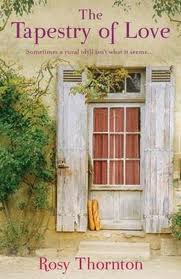
So it was with some trepidation that I agreed to read The Tapestry of Love by Rosy Thornton. I mean, that title! Isn't there something inherently cheesy about any phrase that ends with "of love". Think Power of Love by Huey Lewis and the News. Major cheesefest! And the publisher's blurb wasn't much help...
,
Sounds like a formula romance novel, right? But I read it, and here are the two reasons why-
Lucky for me, you can't always judge a book by its title. The publisher did this one an injustice in the blurb making it seems as though the romance was the central story. What Thornton wrote is a novel about a woman transitioning from one stage of her adulthood to another. It is not a love story in the strictest sense of the word, but a story about the many loves that surround us-love of self, love for family, love for community, and, yes, love of a partner.
I found the book charming. The descriptions of the Cevennes region of France evoked a slowed down, quiet pace of life that I found myself envying. But not everything was perfect in Catherine's new world-the French government and their bureaucracy being the most obvious example. Her plan upon moving to France was to start a small custom needlepoint/soft furniture business (hence the tapestry of the title). She runs up against the French prohibition of any non-farming business opening within Cevennes National Parc. Questioning her place in France, she is drawn back to England in the wake of her mother's death, ultimately forcing her to choose where she feels she belongs. And yes, she was eventually forced to confront the feelings she had developed for the Patrick Castagnol mentioned in the publisher's blurb. But the romance is only one aspect of the larger story of a woman choosing her own path. And frankly, in the time that she has lived alone, first in England after her children went away to school and then in France, she has grown accustomed to her independence and peace. The resolution is one that I think is more realistic and less simplistic than a lot of love stories turn out to be. Which is just fine by me.
So it was with some trepidation that I agreed to read The Tapestry of Love by Rosy Thornton. I mean, that title! Isn't there something inherently cheesy about any phrase that ends with "of love". Think Power of Love by Huey Lewis and the News. Major cheesefest! And the publisher's blurb wasn't much help...
,
A warm and uplifting story of how a woman falls in love with a place and its people: a landscape, a community and a fragile way of life. A rural idyll: that's what Catherine is seeking when she sells her house in England and moves to a tiny hamlet in the Cevennes mountains. With her divorce in the past and her children grown, she is free to make a new start, and her dream is to set up in business as a seamstress. But this is a harsh and lonely place when you're no longer just here on holiday. There is French bureaucracy to contend with, not to mention the mountain weather, and the reserve of her neighbours, including the intriguing Patrick Castagnol.
Sounds like a formula romance novel, right? But I read it, and here are the two reasons why-
- it was free
- it was British
Lucky for me, you can't always judge a book by its title. The publisher did this one an injustice in the blurb making it seems as though the romance was the central story. What Thornton wrote is a novel about a woman transitioning from one stage of her adulthood to another. It is not a love story in the strictest sense of the word, but a story about the many loves that surround us-love of self, love for family, love for community, and, yes, love of a partner.
I found the book charming. The descriptions of the Cevennes region of France evoked a slowed down, quiet pace of life that I found myself envying. But not everything was perfect in Catherine's new world-the French government and their bureaucracy being the most obvious example. Her plan upon moving to France was to start a small custom needlepoint/soft furniture business (hence the tapestry of the title). She runs up against the French prohibition of any non-farming business opening within Cevennes National Parc. Questioning her place in France, she is drawn back to England in the wake of her mother's death, ultimately forcing her to choose where she feels she belongs. And yes, she was eventually forced to confront the feelings she had developed for the Patrick Castagnol mentioned in the publisher's blurb. But the romance is only one aspect of the larger story of a woman choosing her own path. And frankly, in the time that she has lived alone, first in England after her children went away to school and then in France, she has grown accustomed to her independence and peace. The resolution is one that I think is more realistic and less simplistic than a lot of love stories turn out to be. Which is just fine by me.
![]() |
| Cevennes Mountains, France |
![]() |
| What Catherine's rural idyll make have looked like |
Monday, October 11, 2010
A Gate at the Stairs, Lorrie Moore
A Gate at the Stairs is the story of Tassie Keltjin,the daughter of a potato farmer in rural Wisconsin. In the days before 9-11, she is a college student At the University of Wisconsin in Troy, Wisconsin. Like most college students she is cash poor, and so she begins looking for a job to keep herself in clothes and food and heat. She applies to be the nanny for Sarah and Edward Thornwood-Brink, a couple in the process of adopting a biracial baby. From very early on Tassie can sense that something is not quite right with Sarah and Edward. Their manner is just-off from normal, their interactions are intimate and cold at the same time. Tassie never imagines, however, the secret that will come to affect her life and the life of the little girl, Mary-Emma. This novel is a strange, uncomfortable coming of age story, one that left me feeling unsettled, and unsure I really got what Moore was trying to convey.
Moore's writing is rich. Her language shows a depth of thought and a flair for metaphor greater than any other author I've read recently. There are long passages where Tassie is thinking about her life and events in the story that would be worthy of a circus contortionist in the way they bend and twist, making seemingly random connections into something meaningful. This was really interesting for the first three quarters of the novel, but over time I found myself wishing for a more straight-forward narrative. But then, about three quarters of the way through the novel is where I started to feel like the story I thought I was reading was not actually the story Moore was telling.
While most of the story revolves around Tassie's relationship with Sarah and Mary-Emma, there are other, seemingly disparate, stories woven throughout. Tassie has a secret relationship with a fellow student who turns out to belong to a fanatical Islamist organization. When he disappears from her life suddenly, I expected there to be some fall-out for her, but he just fades from the story. When she loses Mary-Emma, I expected there to be some resolution to that storyline, but we never hear what becomes of the little girl. The loss of her brother is the only one in which we get a sense of how that loss affected not just Tassie but her parents as well-and that is the last quarter of the book. The theme of loss is the only constant throughout the story, but it is only with that last loss that we see exactly how deeply Tassie feels her sorrow.
One thing that struck me about this book is all of the white liberal-guilt and angst portrayed by Moore through the interracial adoption group that Sarah and Edward become involved in. The conversations that Tassie overhears while playing upstairs with the children during their meetings are circular, in turns angry and defensive, and probably very authentic, despite seeming stereotypical. The themes never change, and most of the white parents seem to feel that their adoption of the black and biracial children is under-appreciated by people who question their ability to raise children of color. Complaints about people's comments on the street, or the advice they get from well-meaning people that end up sounding like back-handed compliments, are all fodder for their insecurity and self-pity. They bring up issues of race and class, even within liberal communities, that people believe have long been subdued by inclusiveness and acceptance. Moore seems to be pointing out the naivete of people who believe we have entered a post-racial era, where issues of race have mostly been addressed.
Moore's writing is rich. Her language shows a depth of thought and a flair for metaphor greater than any other author I've read recently. There are long passages where Tassie is thinking about her life and events in the story that would be worthy of a circus contortionist in the way they bend and twist, making seemingly random connections into something meaningful. This was really interesting for the first three quarters of the novel, but over time I found myself wishing for a more straight-forward narrative. But then, about three quarters of the way through the novel is where I started to feel like the story I thought I was reading was not actually the story Moore was telling.
While most of the story revolves around Tassie's relationship with Sarah and Mary-Emma, there are other, seemingly disparate, stories woven throughout. Tassie has a secret relationship with a fellow student who turns out to belong to a fanatical Islamist organization. When he disappears from her life suddenly, I expected there to be some fall-out for her, but he just fades from the story. When she loses Mary-Emma, I expected there to be some resolution to that storyline, but we never hear what becomes of the little girl. The loss of her brother is the only one in which we get a sense of how that loss affected not just Tassie but her parents as well-and that is the last quarter of the book. The theme of loss is the only constant throughout the story, but it is only with that last loss that we see exactly how deeply Tassie feels her sorrow.
One thing that struck me about this book is all of the white liberal-guilt and angst portrayed by Moore through the interracial adoption group that Sarah and Edward become involved in. The conversations that Tassie overhears while playing upstairs with the children during their meetings are circular, in turns angry and defensive, and probably very authentic, despite seeming stereotypical. The themes never change, and most of the white parents seem to feel that their adoption of the black and biracial children is under-appreciated by people who question their ability to raise children of color. Complaints about people's comments on the street, or the advice they get from well-meaning people that end up sounding like back-handed compliments, are all fodder for their insecurity and self-pity. They bring up issues of race and class, even within liberal communities, that people believe have long been subdued by inclusiveness and acceptance. Moore seems to be pointing out the naivete of people who believe we have entered a post-racial era, where issues of race have mostly been addressed.
Thursday, September 16, 2010
The Midwife's Tale, Gretchen Moran Laskas
In the early 1900s, a young girl lived with her mother at the base of Denniker's mountain in rural West Virginia. Her name was Elizabeth Whitely, and her mother was a midwife. Even before she reached her own childbearing age, Elizabeth became her mother's assistant, and finally a midwife in her own right, following in the footsteps of not just her mother, but her grandmother and great-grandmother. Elizabeth was also a bastard, never knowing her father. And she was in love, with Alvin Denniker, for whose family the mountain was named. But Alvin came home from a trip across the country with a Cuban bride, Ivy, crushing Elizabeth's hopes. Despite this, Elizabeth and Ivy became close, and Elizabeth helped her deliver her daughter, Lauren. When tragedy strikes Ivy and Alvin's family, Elizabeth steps in, raising Lauren as her own. But when Lauren demonstrates a "gift" that could turn her into a tent-revival freak show, Elizabeth has to make the difficult decision to send her away, losing not only the daughter she has come to love, but the man as well.
Laskas has given us in The Midwife's Tale a story about the deep connection between mothers and daughters. Rather than being sentimental, the relationships between mothers and daughter in this book are fraught with anger, resentment, and rebellion. Elizabeth's mother rebelled by going with the man who gave her Elizabeth, and then again by moving herself and Elizabeth to their own house on the mountain-something unheard of for an unmarried women in the early 20th century. Elizabeth's rebellions are similar-her decision not to become a midwife after learning about her mother's part in smothering unwanted babies, leaving her home to live with a man to whom she is not married. But each woman, despite the anger and resentment they sometimes feel, are deeply connected by love, family, and tradition. Elizabeth as a mother herself is devoted, continuing to live in less-than-ideal conditions with a man who won't marry her for the sake of being with Lauren. Lauren really ends up being the catalyst for a lot of change in Elizabeth's life-where she lives, who her man is, what her job is, and ultimately her own pregnancy.
While I don't mind magical realism in a novel, in this one it felt superfluous. When Lauren begins curing people, about midway through the book, it caused a strange dissonance for me between the story I thought I was reading and the one that Laskas apparently meant to write. I suppose that using Lauren's gift as the reason that Lauren has to be sent away from the mountain was one way to go, but even that rational felt tenuous to me. Frankly, I think that the story of a strong young woman finding her own way in the world, despite the sexism of the time period, would have been stronger if there has not been this attempt to explain at least some of her decisions away on her adoptive daughter's faith healing.
Laskas has given us in The Midwife's Tale a story about the deep connection between mothers and daughters. Rather than being sentimental, the relationships between mothers and daughter in this book are fraught with anger, resentment, and rebellion. Elizabeth's mother rebelled by going with the man who gave her Elizabeth, and then again by moving herself and Elizabeth to their own house on the mountain-something unheard of for an unmarried women in the early 20th century. Elizabeth's rebellions are similar-her decision not to become a midwife after learning about her mother's part in smothering unwanted babies, leaving her home to live with a man to whom she is not married. But each woman, despite the anger and resentment they sometimes feel, are deeply connected by love, family, and tradition. Elizabeth as a mother herself is devoted, continuing to live in less-than-ideal conditions with a man who won't marry her for the sake of being with Lauren. Lauren really ends up being the catalyst for a lot of change in Elizabeth's life-where she lives, who her man is, what her job is, and ultimately her own pregnancy.
While I don't mind magical realism in a novel, in this one it felt superfluous. When Lauren begins curing people, about midway through the book, it caused a strange dissonance for me between the story I thought I was reading and the one that Laskas apparently meant to write. I suppose that using Lauren's gift as the reason that Lauren has to be sent away from the mountain was one way to go, but even that rational felt tenuous to me. Frankly, I think that the story of a strong young woman finding her own way in the world, despite the sexism of the time period, would have been stronger if there has not been this attempt to explain at least some of her decisions away on her adoptive daughter's faith healing.
Sunday, September 12, 2010
It's Monday! What Are You Reading?
Welcome to another Monday morning! Since last Monday was Labor Day, I chose not to labor on my blog, so this is a review of my reading for the last couple of weeks.
Books I finished:
The Midwife's Tale, by Gretchen Moran Laskas
(Review coming soon!)
Next on my literary horizon:
The Chalk Circle Man, by Fred Vargas
When strange, blue chalk circles start appearing overnight on the pavements of Paris, the press take up the story with amusement and psychiatrists trot out their theories. Adamsberg is alone in thinking this is not a game and far from amusing. He insists on being kept informed of new circles and the increasingly bizarre objects which they contain: empty beer cans, four trombones, a pigeon’s foot, four cigarette lighters, a badge proclaiming “I Love Elvis,” a hat, a doll’s head. Adamsberg senses the cruelty that lies behind these seemingly random occurrences. Soon a circle with decidedly less banal contents is discovered: the body of a woman with her throat savagely cut. Adamsberg knows that other murders will follow. (from Goodreads)
One Day, by David Nichols
Emma and Dexter meet for the first time on the night of their graduation. Tomorrow they must go their separate ways. So where will they be on this one day next year? And the year after that? And every year that follows? Twenty years, two people, ONE DAY. From the author of the massive bestseller STARTER FOR TEN. (from Goodreads)
Bad Monkeys, by Matt Ruff
Jane Charlotte has been arrested for murder.She says she's a member of a secret organization devoted to fighting evil. She says she's working with the Department for the Final Disposition of Irredeemable Persons—aka "Bad Monkeys."
Her confession lands her in the jail's psychiatric wing and earns her countless hours of poking, probing, and questioning by a professional. But is Jane crazy or lying?
Or is she playing a whole different game altogether? (from Goodreads)
Have a wonderful reading week, everyone!
Sunday, September 5, 2010
The Passion of Alice, by Stephanie Grant
In her 1995 novel of self-acceptance, The Passion of Alice, Stephanie Grant paints a picture of a young woman stuck-not able to move forward with her life, and slowly fading away to nothingness. Alice is a 25 year old librarian who is hospitalized at the eating disorders clinic at the well-known Seaview Hospital after a heart attack caused by her extreme thinness. At 89 pounds and 5'10" tall, Alice feels that she is starving herself down to her very essence, shedding everything not about her that is not essential. While at the hospital, she begins to gain weight while getting to know Gwen, a frail timid anorexic; Louise, a grossly overweight woman who is a compulsive eater; and finally Maeve, a risk-taking bulimic who forces Alice to confront her sexuality. When Maeve escapes the hospital, Alice has her second brush with death, and when she gets a visit from an old friend, she finally realizes that in order for her to move forward with her life, she must accept all parts of herself. She cannot starve away her feelings.
If this sounds a little bit like the gay version of Girl, Interrupted, you're not wrong. It felt a bit like the gay version of Girl, Interrupted. However, many of the things that made the book Girl, Interrupted powerful are also present in this story. Grant focuses not so much on the disease of anorexia as the reasons for Alice's starvation. When Alice goes to chapel on week, she shares with the nurse that escorts her that "passion" also means "suffering", and that becomes the major underlying theme of the book. Anything that causes Alice to feel passionate also causes her suffering. Trying to live up to her mother's expectations, her feelings about women and sex, her desire for food that she knows she won't eat. Her anorexia becomes a way to control her passions, essentially trying to starve the feelings away until she is left with nothing but her most essential essence. What she discovers is that her feelings, especially her feelings about women and sex, are an essential part of her.
Loss of innocence and maturation is also a recurring theme throughout the book. For Alice, that means coming out of a state of willful ignorance about herself-basically, she figures out it's time to put her big girl pants on and get on with things! To some extent it feels as though most of the women on the unit are having a similarly hard time integrating into adulthood-even the ones who have been chronological adults for quite some time. Their reactions to each other, their petty fights, their childish behavior when in public all lead to this sense of them being childlike. The implication seems to be that perhaps the first step in being healthy was to grow up. This can mean confronting some harsh realities-like when one of the doctors catches them off-grounds and offers to trade his silence for sex.
There is less accusation against the psychiatric community in this novel than in similar books, but as the example above shows not everyone in the hospital is portrayed in a positive light. What the setting of the hospital did for me was provide a symbol of the way in which society tries to define what is healthy and normal, and how anyone outside of that definition is considered broken and in need of fixing. It is my sincere hope that we are finally getting to a point in our country where gays and lesbians are no longer seen as broken, but are fully accepted for who we are.
If this sounds a little bit like the gay version of Girl, Interrupted, you're not wrong. It felt a bit like the gay version of Girl, Interrupted. However, many of the things that made the book Girl, Interrupted powerful are also present in this story. Grant focuses not so much on the disease of anorexia as the reasons for Alice's starvation. When Alice goes to chapel on week, she shares with the nurse that escorts her that "passion" also means "suffering", and that becomes the major underlying theme of the book. Anything that causes Alice to feel passionate also causes her suffering. Trying to live up to her mother's expectations, her feelings about women and sex, her desire for food that she knows she won't eat. Her anorexia becomes a way to control her passions, essentially trying to starve the feelings away until she is left with nothing but her most essential essence. What she discovers is that her feelings, especially her feelings about women and sex, are an essential part of her.
Loss of innocence and maturation is also a recurring theme throughout the book. For Alice, that means coming out of a state of willful ignorance about herself-basically, she figures out it's time to put her big girl pants on and get on with things! To some extent it feels as though most of the women on the unit are having a similarly hard time integrating into adulthood-even the ones who have been chronological adults for quite some time. Their reactions to each other, their petty fights, their childish behavior when in public all lead to this sense of them being childlike. The implication seems to be that perhaps the first step in being healthy was to grow up. This can mean confronting some harsh realities-like when one of the doctors catches them off-grounds and offers to trade his silence for sex.
There is less accusation against the psychiatric community in this novel than in similar books, but as the example above shows not everyone in the hospital is portrayed in a positive light. What the setting of the hospital did for me was provide a symbol of the way in which society tries to define what is healthy and normal, and how anyone outside of that definition is considered broken and in need of fixing. It is my sincere hope that we are finally getting to a point in our country where gays and lesbians are no longer seen as broken, but are fully accepted for who we are.
Subscribe to:
Posts (Atom)