This week's Top Ten List (hosted by The Broke and the Bookish) asks us to choose ten books written in the last decade (or so) that we hope people will still be reading in 30 years time. Since I haven't done a Top Ten in a while, this seemed like a good week to jump back in. I mean, basically I just have to list my ten favorite books of the last ten years right?
As it turns out, wrong. There is a difference between a book that you loved personally and one that you think that people should still be reading in 30 years. For that kind of staying power it should be something that speaks to our common humanity and portrays something important about our society at large, in my humble opinion. So, I have created a list not just of books that I love (though I do love them all), but that I think have something important to say about the human experience and the societies we create.
A Thousand Splendid Suns, Khaled Mosseini-The eradication of the oppression of women is a major indicator of a society becoming more developed, and this book shows us why.
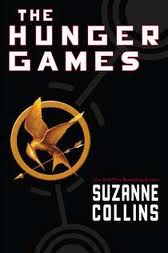
The Hunger Games, Suzanne Collins-Yes, I know it's YA and people are probably tired of hearing about it, but this book is so full of social commentary that I hope teachers are actively teaching with it 30 years from now-and that we have not yet taken our voyeurism and "reality" tv to that extreme.
The Harry Potter Series-Basically for the same reason as The Hunger Games. Underlying the magic and whimsical elements is a solid foundation of social justice and equality.
The Time Traveler's Wife, Audrey Niffenegger-OK, this one is mostly on the list just because I loved it so, but it does have some interesting things to say about the nature of relationships.
Oryx and Crake and The Year of the Flood, Margaret Atwood-What The Handmaid's Tale did in highlighting reproductive choice, these books do for environmental issues, with some feminism thrown in.
Nickel and Dimed, Barbara Ehrenreich-This book puts the lie to the conservative claim that if you have a job and work hard you will get ahead in American. Not if you are working for minimum wage, and Ehrenreich lived it to prove it.
The Book Thief, Markus Zusak-Amazingly beautiful, heart-breaking, transcendent and brutal, reading this book made me understand how the Nazi's affected the everyday German, and it is a great picture of courage.
Monster, Walter Dean Myers-Another YA title, this book illuminates the way that poverty and the need to survive can make people act against their own interests, and how incarceration affects teens.
Showing posts with label environmentalism. Show all posts
Tuesday, May 29, 2012
Wednesday, January 19, 2011
The Year of the Flood, by Margaret Atwood
There are some authors whose books I will read regardless of what they are about. Often, I don't even know what they are about, because if I see the author's name on the cover I don't even bother to read the synopsis. There aren't many of them, but one of my must-read authors is Margaret Atwood. Ever since reading The Handmaid's Tale in college I have been a huge fan of her work. The Handmaid's Tale literally changed my life. Before then, I called myself a feminist because I was raised to believe that men and women are equal, but I had never really thought deeply about the issues that kept women from being full participants in the world's political and social realms. Reading The Handmaid's Tale was an "ah ha" moment for me, when I began to truly understand the moral and ethical questions behind feminism specifically, and social justice movements in general. While none of her other books has had quite the same effect on me, I have read all of them with a sense of wonder and admiration at Atwood's ability to create characters and stories that examine some of our most complex social dilemmas, not to mention her ability to use language in a way that is sometimes raw and powerful, and other times transcendentally beautiful.
The Year of the Flood is her latest novel, and it is a "sequel" to her novel Oryx and Crake, though much of it takes place during the same time period as the first, focusing on different characters. The novel is set in the not-so-distant future, when corporations have attained global dominance, and the planet is quickly apporaching ecological disaster. It is centered around two female protagonists, Ren and Toby. Both become a part of an eco-cult called God's Gardeners, a group who eschews the technological advances of modern society and preaches a return to the days when food actually came from nature and people were not treated as fodder-either labor or consumer- for the large corporations. They believe that a "waterless flood" is coming, one that will sweep away all of mankind's corruption of the natural world, and they want to be prepared when it does.
As dystopian fiction goes, Atwood's near-future is as gritty and dark as can be imagined. Human depredation has reached new levels, with the corporations greedily commodatizing all aspects of human life, including the sex trade and drug trafficking. Most of the population lives on the edges of society, scraping by in whatever way-legal or illegal-they can find. Anyone who runs afoul of the corporations can find themselves snatched off the street by the CorpSeCorp, the security arm of the multinationals that has replaced the armed forces and police. While the richest and smartest live in walled compounds run by the corporations, the rest are left in slums called the "pleebs". In the dangerous, crime-ridden world of the pleebs, helping your neighbor is likely to get you arrested or killed, and so a self-defeating selfishness has become the norm. Like all repressive governments, the complete control of the CorpSeCorp has turned person again person, causing them to act in ways that are against their own interest.
As speculative fiction goes, I sincerely hope that the future Atwood envisions is wrong, wrong, wrong. Sadly, too much of it felt completely possible to me. From genetic manipulation to the power of the corporations to the suppression of dissent and the oppression of the people in the name of making money-all too close to reality. In addition, now that most reputable scientists and rational people have come to accept global warming as a fact, it is not too much of a stretch to think that the destruction of the natural world that prefaces so much of what happens in the book could be around the corner.
Sounds depressing, right? And this book certainly has its highs and lows in terms of emotional impact. But ultimately there is hope. When the "waterless" flood finally comes, those people who learned about the natural world and how to survive without technology and consumer goods were able to survive the chaos of the de-evolution of our society, and were able to begin rebuilding a world more in balance with nature. As The Year of the Flood ends, the survivors are still finding each other, and I can't help but wonder what the next months and years hold for them. Several websites I've found have described this book as the second in the MaddAdam trilogy, so I assume that I may yet get my wish to find out if there is indeed hope for the future-of Atwood's fictional society, and for ours.
The Year of the Flood is her latest novel, and it is a "sequel" to her novel Oryx and Crake, though much of it takes place during the same time period as the first, focusing on different characters. The novel is set in the not-so-distant future, when corporations have attained global dominance, and the planet is quickly apporaching ecological disaster. It is centered around two female protagonists, Ren and Toby. Both become a part of an eco-cult called God's Gardeners, a group who eschews the technological advances of modern society and preaches a return to the days when food actually came from nature and people were not treated as fodder-either labor or consumer- for the large corporations. They believe that a "waterless flood" is coming, one that will sweep away all of mankind's corruption of the natural world, and they want to be prepared when it does.
As dystopian fiction goes, Atwood's near-future is as gritty and dark as can be imagined. Human depredation has reached new levels, with the corporations greedily commodatizing all aspects of human life, including the sex trade and drug trafficking. Most of the population lives on the edges of society, scraping by in whatever way-legal or illegal-they can find. Anyone who runs afoul of the corporations can find themselves snatched off the street by the CorpSeCorp, the security arm of the multinationals that has replaced the armed forces and police. While the richest and smartest live in walled compounds run by the corporations, the rest are left in slums called the "pleebs". In the dangerous, crime-ridden world of the pleebs, helping your neighbor is likely to get you arrested or killed, and so a self-defeating selfishness has become the norm. Like all repressive governments, the complete control of the CorpSeCorp has turned person again person, causing them to act in ways that are against their own interest.
As speculative fiction goes, I sincerely hope that the future Atwood envisions is wrong, wrong, wrong. Sadly, too much of it felt completely possible to me. From genetic manipulation to the power of the corporations to the suppression of dissent and the oppression of the people in the name of making money-all too close to reality. In addition, now that most reputable scientists and rational people have come to accept global warming as a fact, it is not too much of a stretch to think that the destruction of the natural world that prefaces so much of what happens in the book could be around the corner.
Sounds depressing, right? And this book certainly has its highs and lows in terms of emotional impact. But ultimately there is hope. When the "waterless" flood finally comes, those people who learned about the natural world and how to survive without technology and consumer goods were able to survive the chaos of the de-evolution of our society, and were able to begin rebuilding a world more in balance with nature. As The Year of the Flood ends, the survivors are still finding each other, and I can't help but wonder what the next months and years hold for them. Several websites I've found have described this book as the second in the MaddAdam trilogy, so I assume that I may yet get my wish to find out if there is indeed hope for the future-of Atwood's fictional society, and for ours.
Subscribe to:
Posts (Atom)