Sunday, June 12, 2011

Mailbox Monday

Mailbox Monday is a gathering place for readers to share the books that came into their house last week and explore great book blogs. This month's Mailbox Monday is hosted by Bluestocking.

Here's what I received last week:

1) The Lake by Banana Yoshimoto (bought from The Book Depository; and I can't wait to read it!)

What books came into your house last week?

Thursday, June 9, 2011

Literary Blog Hop-Reading in a Bubble

This week's topic for the Literary Blog Hop, hosted by The Blue Bookcase, is this:

What outside influences affect your reading experience? Do you think these influences enhance or detract from the experience?

 I have to admit that at first I wasn't entirely sure what this meant.  Are we talking physical surroundings?  Environmental noise?  People who are clearly not readers interrupting you to ask you what you are reading (because if they were readers they would never interrupt you!)?

But reading Meghan's answer, I see now that the question pertains to something more subtle and less concrete than that. Meghan's story about seeing a Hallmark adaptation of a book that colored her future reading of the book illustrates that our life experiences with one book in particular or a subject in general can change the way that we perceive a text.  In reading theory, we call that the transactional theory of reading.  The idea that each of us brings different experiences, behaviors, and feelings to a piece of writing, and therefore we each go away from the text with something different.  There may be many places where people's perceptions or feelings about the books overlap-after all, any freshman English teacher can tell you the major themes of Lord of the Flies or To Kill a Mockingbird-but no two people will read and understand a book in exactly the same way.  This is especially true for literary works, where authors' use of symbolism, metaphor, and allegory can lead readers down many paths of understanding based on their own knowledge and experiences.  Non-Christians not living in the US may read The Lion, The Witch, and the Wardrobe and have no clue that a lot of it is Christian symbolism.  Reading can never be context independent.

So, understanding reading as a transactional process, then my answer to the question of which outside influences affect the reading experience is ALL OF THEM.   Like Meghan could not divorce her mind from the different ending of the movie version of the book she was reading, none of us can put our own knowledge, experiences, and feelings aside when reading.  What to me was a very sexist book about the relationships of husbands and wives (I'm looking at you, On Strike for Christmas) was to my friend a charming story about wifely assertiveness.  A story about an Africa refugee from Nigeria might read very differently to someone of African descent than someone of Asian or European descent.     Our common understanding of theme and mood come from discussion, from sharing each person's own take on the book, from analyzing it from academic as well as personal perspectives.   As a reader, I can often see why an author chose a certain style, and appreciate it for it's artistic merit, but in the end how I respond to a book has more to do with me than with the author.

Monday, June 6, 2011

Books: Attention!

Well there won't be a Teaser Tuesdays post today since I'm still reading Girl in Translation by Jean Kwok. It is an engaging read and I'm enjoying every moment of it; I just wish there is more time for my reading so I could finish this book soon and move on with other books in my pile. There are simply too many books and so little time!

That said, I'd like to share with you some of the few books that caught my attention lately. I had ordered two of them online and also responded to the publicists' emails for the other two books which I hope to receive them soon.
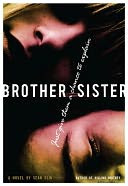


Brother/Sister by Sean Olin
ISBN-13: 9781595143860
Publisher: Penguin Group (USA)
Published: June 2011

Synopsis (B&N):
Will and Asheley have a troubled past. Their father left them when they were little, and their mother has just been carted off to an alcohol treatment center. Now, they have the house to themselves, and an endless California summer stretching out before them. Through alternating perspectives, they tell the story of how and why their lives spun violently out of control - right up to the impossibly shocking conclusion you'll have to read for yourself to believe.
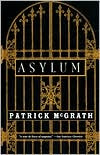

Asylum by Patrick McGrath
ISBN-13: 9780679781387
Publisher: Knopf Doubleday Publishing Group
Published: March 1998

Synopsis (B&N):
From our most celebrated writer of the psychological thriller comes this nerve-wracking yet eerily beautiful work of erotic obsession and madness.

In the summer of 1959 Stella Raphael joins her psychiatrist husband, Max, at his new posting--a maximum-security hospital for the criminally insane. Beautiful and headstrong, Stella soon falls under the spell of Edgar Stark, a brilliant and magnetic sculptor who has been confined to the hospital for murdering his wife in a psychotic rage.

But Stella's knowledge of Edgar's crime is no hindrance to the volcanic attraction that ensues--a passion that will consume Stella's sanity and destroy her and the lives of those around her.
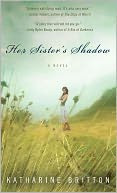

Her Sister's Shadow by Katharine Britton
ISBN-13: 9780425241745
Publisher: Penguin Group (USA)
Published: June 2011

Synopsis (B&N):
An emotionally powerful debut about two sisters who reconnect after nearly forty years of estrangement.

Renowned painter Lilli Niles is at home in her North London flat when she receives an unexpected call from her elder sister, Bea, who's at the family homestead in Whitehead, Massachusetts. Bea's husband has just died, and she'd like Lilli to fly home to attend the funeral. There are reasons Lilli moved all the way to England to escape her older sister, reasons that have kept them estranged for decades. But something in Bea's voice makes Lilli think it's time to return to the stately house in New England she loved as a child, to the memory of the beloved younger sister they both lost. With Bea more fragile than Lilli remembered, maybe she can finally forgive Bea for a long-ago betrayal that has simmered between them for nearly forty years.


Everything Beautiful Began After by Simon Van Booy
ISBN-13: 9780061661488
Publisher: HarperCollins Publishers
Published: July 2011

Synopsis (B&N):
Rebecca is young, lost, and beautiful. A gifted artist, she seeks solace and inspiration in the Mediterranean heat of Athens—trying to understand who she is and how she can love without fear.

George has come to Athens to learn ancient languages after growing up in New England boarding schools and Ivy League colleges. He has no close relationships with anyone and spends his days hunched over books or wandering the city in a drunken stupor.

Henry is in Athens to dig. An accomplished young archaeologist, he devotedly uncovers the city’s past as a way to escape his own, which holds a secret that not even his doting parents can talk about.

And then, with a series of chance meetings, Rebecca, George, and Henry are suddenly in flight, their lives brighter and clearer than ever, as they fall headlong into a summer that will forever define them in the decades to come.

Friday, June 3, 2011

Never Let Me Go, Kazuo Ishiguro

I was not prepared.  When I decided to read Never Let Me Go, by Kazuo Ishiguro, I did so as a way to give the author a second try.  I have tried to read The Remains of the Day back in college, and I found the tight, closely-controlled writing difficult, and not in a good way.  When I saw the movie they made from the book, I realized why it was written the way that it was.  But I couldn't get through it.  When I started to see Never Let Me Go all over the blogosphere, I had to work myself up for another try.  I try not to read too many reviews of the books I'm going to read before I read them-I don't want someone else's opinion to blur my own-so I really didn't know much about the book except that I had tried to read this author before and failed.

Imagine my surprise when I discovered that this book is about as far away from the content of The Remains of the Day as it is possible to get and still be the same form of media.  Never Let Me Go is the story of Kath, Tommy, and Ruth, three students at a boarding school in England, which you very quickly realize is not your typical boarding school.  The students are clones, created specifically to become organ donors.  Their teachers try to shield them as best they can from the inevitability of their fate, but each in their turn goes off to be a carer-someone who helps donors recover-until it is their turn to be cut up for parts. 

Given the subject matter, you might assume that this book is a treatise on medical ethics or social justice, but Ishiguro uses this rather interesting setting to tell a coming-of-age story.  The story is told with Kath as narrator, and it opens with her getting ready to retire from being a carer.  The story is told as memory, in Hansel and Gretl fashion-Ishiguor leaves a trail of crumbs, hints of what is really going on behind the placid boarding school setting, tidbits that make it impossible to stop reading until you figure out what is going on.  Everything is just slightly askew in this book-it's like the real world slipped sideways just a bit.

Ishiguro begins with Kath explaining her retirement from being a carer, though at the time you have no idea what that actually means.  What this narrative structure does is allow the reader to spend the bulk of the novel  pondering the relationships the characters have to each other, rather than waiting for them to escape from their predicament.  While the fact of their creation and eventual destruction is always below the surface, there are many things in Ruth, Kath, and Tommy that are familiar.  First love, jealousy, betrayal, insecurity-all pretty universal elements of a classic coming-of-age story.  By the time Ishiguro finally gets around to giving you enough information about the donation program to figure out what's been going on, it's practically the end of the book.  Only then do you realize that what you have been reading is not just your ordinary teenage love story, but a story about what it means to be human.  If clones can love and hurt and feel anger and fear, then what separates them from the "natural" people who created them?

Thursday, June 2, 2011

Sleep Toward Heaven

While I try not to get too political on this blog, I will state now that I am against the death penalty.  I don't see how the use of state-sanctioned killing makes us any safer or improves us as a society or a race.  I would like to think that if the worst happened and one of my loved ones was murdered, I would be able to stand up for what I believe is right and not give in to the anger or the need for revenge.  Why do I bring this up, you ask?  Because the death penalty and what it means to the condemned and the families of the victims plays a major role in Sleep Toward Heaven, by Amanda Eyre Ward.

Sleep Toward Heaven is the story of three women-Karen, convicted serial killer; Franny, prison doctor; and Celia, the widow of Karen's final victim.  Karen resists human connection, wanting nothing holding her in a world she desperately wants to leave.  Her life, from miserable beginning with a drug addicted, abusive mother to horrifying end, has been nothing but fear and pain and hopelessness.  Franny, recovering from the loss of a beloved patient and the uncle who raised her, is also afraid of making human connection.  Feeling that every human deserves comfort, how can she comfort Karen, knowing she can not save her?  Celia desperately wants human connection-but only with the husband that she can never be with.  She is stuck in place, unable to move on with her life.  It seems that forgiveness is what each is seeking-Karen, forgiveness for her crimes; and Franny, forgiveness for not being able to save her patients.  Celia's need is not for forgiveness for herself, but for the courage and strength to forgive Karen, who took so much from her. 

The women in this book are fairly well-drawn characters, and I found myself connecting to each of them in different ways.  Ward does an excellent job setting the mood with her descriptions of the prison, or the sweltering Texas summer, which adds to the overall feeling of oppression that exists in the book.  Each woman is being held back by something-guilt, illness, fear, anger-and their inability to move forward mimics the lethargy of a hot, humid afternoon, when you just want to be still because every movement is such an effort.

The one thing that bothered me about the book, which is pretty well paced and engaging, was the sub-plot of Karen from before she was in prison.  She was abused as a child, started prostituting herself at a young age, met a woman who she fell in love with.  They lived in a motel, and Karen would pick up johns at rest areas and truck stops to support them.  When she started killing, it was partly self-defense and partly to get things for her lover.  Does that sound familiar to anyone?  If you've seen the movie Monster, about serial killer Aileen Wuornos, then it should.  So many of the details were the same it felt a little less like mirroring contemporary culture and a little more like fictionalizing someone's life without so much as a passing reference.  Overall I would say this is a decent easy read.

Wednesday, June 1, 2011

In The Miso Soup by Ryu Murakami and... Japanese Literature Challenge 5

ISBN-13: 9780747578888
Publisher: Bloomsbury Publishing PLC
Published: February 2006 (new edition)
192 pgs
Source: Personal Library
Translated by: Ralph McCarthy


At first glance of the cover, In The Miso Soup gave me the impression of a fiction about the Japanese culture but I knew there is something more than meets the eye with that cartoony image of a bowl of miso soup that looks like blood and reading the blurb confirmed my initial speculations of the book.

The story opens with the narrator introducing himself as a sex tour guide for foreigners and that he has no qualms about his job. However this does not mean that twenty-year-old Kenji is an insensitive and a selfish person; he does take pride in his job and he treasures his relationship with his sixteen-year-old girlfriend Jun.

Just before New Year's Day, he receives a telephone call from an American named Frank. Frank wants Kenji to take him on a guided tour of Tokyo's sleazy nightlife for three nights and the money is too good for Kenji to pass up despite he has promised to spend the time with Jun.

When he meets up with Frank, the latter gives him the impression that something isn't quite right from his behaviour and on top of that, the things he said earlier doesn't seem to match when they have the same conversation the next time. With the recent case of a high school girl being hacked and the murderer is still at large, Kenji suddenly has this terrible thought that Frank might be the murderer.

In The Miso Soup is a highly intense psychological thriller I have ever read in a long time. I would compare my reading experience of this book to riding a roller coaster; the story seems to be moving at a moderate pace right from the beginning with the introduction of Kenji and then moving on to Frank's. The pace quickened towards the middle of the book and I have to say I'd never forget one terribly shocking scene when the author described in details how a few victims were gruesomely cut and left to die. If this story is to be told on the big screen I don't think I'd be able to watch it. I personally think that that scene is the climax of the story and that once I get past that, everything seems to be falling into place, literally.

But what I find so intriguing about this book is not the plot but the message behind it as it touches on subjects like moral corruption, lack of identity and then the loneliness one feels without the love and support of a family. Each of this issue poses a problem on its own but add them all up together and may become a psychological issue. Another subject that is thought-provoking is the "compensated dating" among Japanese high school girls. I can't judge them all, but what they do and the difficulties they encounter really makes me sad.

In the Miso Soup is not an easy read for me subject-wise but one that would definitely leave a deep impression on me given the author's straight-to-the-point writing style and one particularly gruesome scene.


Now that we are on the topic of Japanese literary, I'd like to bring your attention to the Japanese Literature Challenge 5 hosted by the lovely Dolce Bellezza. The requirement is to read one book from June 1, 2011 until January 30, 2012 but of course it'd be wonderful if you want to read more than one book.

I'm definitely joining and the book I'm most likely to read will be The Lake by Banana Yoshimoto. I hope you'd join in the fun too!